
Ayr Racecourse Betting Guide
Ayr Betting Guide 2026: Data-Driven Insights for Smarter Race-Day Bets
 Available in US
Data-driven insights for smarter race-day bets.
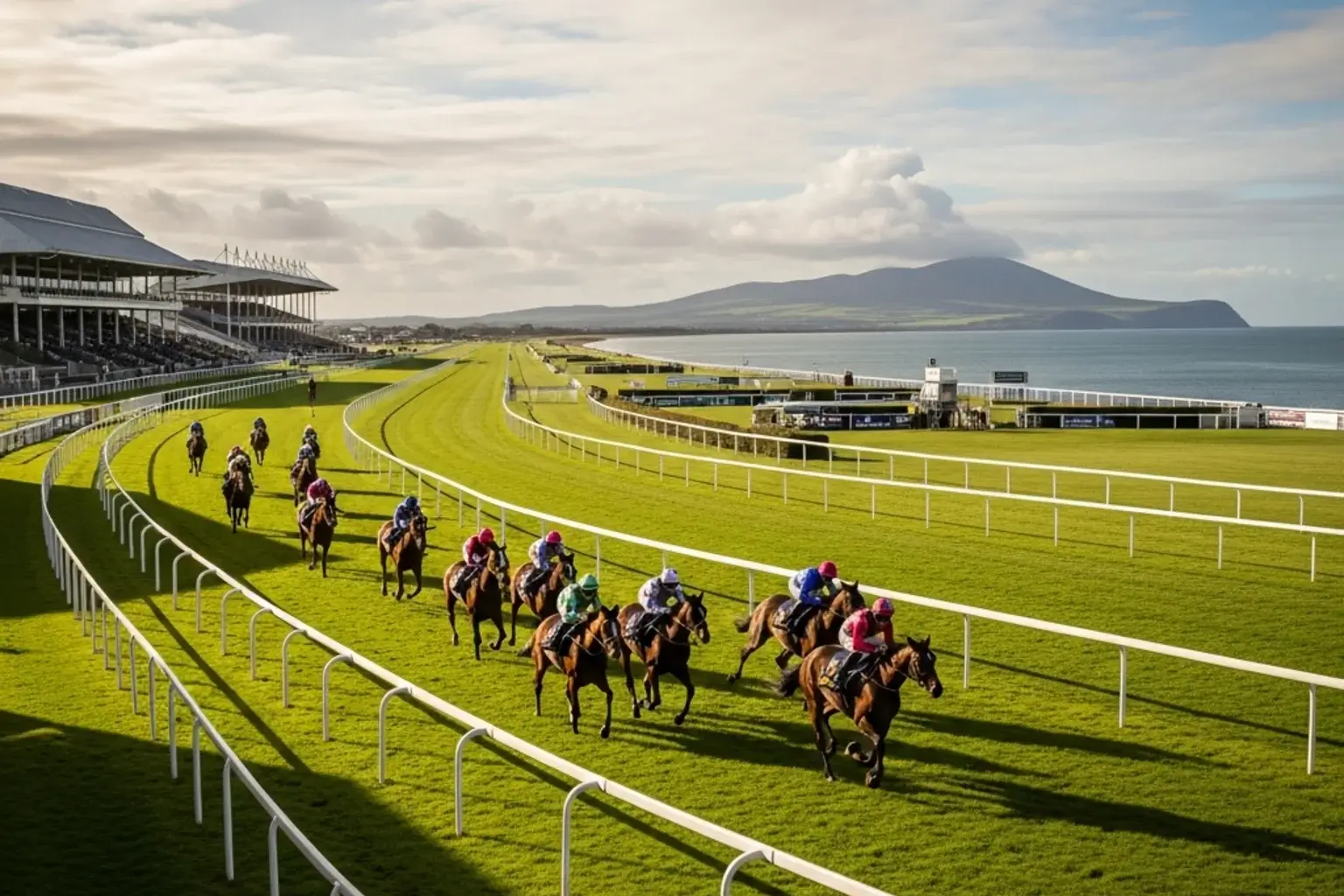
Every September, when twenty-five sprinters load into the stalls for the Ayr Gold Cup, something peculiar happens. Punters who have done their homework reach for the double-figure stalls while casual bettors back names they recognise from Ascot or York. The difference in outcomes tells you everything about why Ayr betting rewards preparation over intuition.
Ayr Racecourse occupies a unique position in British racing. It is Scotland's only Grade 1 track, host to the richest sprint handicap in Europe, and a venue where draw bias data can transform long-shot punts into informed selections. Yet most coverage treats it as a northern outpost rather than a destination requiring specialist knowledge. That oversight creates opportunity for bettors willing to dig deeper.
The broader picture provides context for what makes Ayr particularly valuable right now. UK racecourse attendance reached 5.031 million in 2025, breaking through the five million barrier for the first time since 2019. Of those racegoers, 68% were casual visitors or first-timers, according to British Horseracing Authority data. This influx of newcomers means market inefficiencies persist longer than they might at Cheltenham or Newmarket, where the crowd skews towards experienced punters who correct mispricings quickly.
Scottish racing has been building momentum. Nearly 400,000 spectators visited Scotland's five racecourses last season, a 29% increase from 2015, and racing remains the second-most-attended sport in Scotland after football. Ayr accounts for the lion's share of that interest, hosting approximately 32 fixtures per year across both flat and National Hunt seasons. When the Scottish Grand National sold out in April 2025 and generated an estimated ten million pounds for the local economy, it confirmed what regular attendees already knew: Ayr has graduated from regional curiosity to must-watch fixture.
Yet challenges persist across the industry. Anne Lambert, Interim Chair of the Horserace Betting Levy Board, acknowledged in the organisation's 2024/25 report that racing is facing significant challenges. Betting turnover on British racing fell 6.8% in 2024 compared to the previous year. Despite this, the levy yield reached a record £108.9 million, which might seem contradictory until you understand how the levy calculation works. The paradox matters because prize money growth depends on these figures, and Ayr has been a beneficiary. HBLB allocated £72.7 million to prize money in 2025, enabling flagship races like the Gold Cup to maintain their competitive edge.
This guide strips away the generic advice that treats Ayr as interchangeable with any other left-handed track. Instead, you will find data-driven insights for smarter race-day bets: the three-stall positioning system that most pundits ignore, trainer patterns that predict form before the market catches on, and the going conditions that flip everything you think you know about draw bias. Whether your interest lies in the chaos of a twenty-five runner sprint handicap or the tactical chess of the Scottish Grand National, the principles remain consistent: understand what makes Ayr different, and the betting follows.
The Data-Driven Edge at Ayr: What Every Punter Needs First
- High draws dominate the Ayr Gold Cup: 71% of winners since 2000 came from double-figure stalls, with 15 of the last 16 from stall eight or higher. This is the single most actionable insight for sprint handicaps.
- Favourites fail frequently. Only 4 of 24 Gold Cup favourites have won since 2000, making contrarian selections at double-figure odds the profitable approach.
- Karl Burke and Kevin Ryan are the flat trainers to follow. Burke achieved an unprecedented 1-2-3 in 2024; Ryan has five wins since 2007. For the Scottish Grand National, Irish trainers including Willie Mullins have won 8 of the last 15 renewals.
- Ground conditions favour consistent going due to sandy soil drainage. The interaction between going and draw bias matters: soft ground shifts advantage from high draws to low and middle stalls at six furlongs.
- Profile the winner: aged 4-6, carrying under 9st 5lb, rated 95-104. Nine of twelve recent Gold Cup winners matched this template.
Ayr Racecourse at a Glance: Track, Layout and Character
Ayr Racecourse sprawls across 155 acres of the Ayrshire coast, its grandstand facing west towards Arran and the Irish Sea. The track is left-handed, oval-shaped, and roughly twelve furlongs in circumference with long, sweeping bends rather than the tight turns that catch out horses at somewhere like Chester. For bettors, the configuration rewards certain running styles and punishes others, which is why understanding the layout matters before you study a single entry.
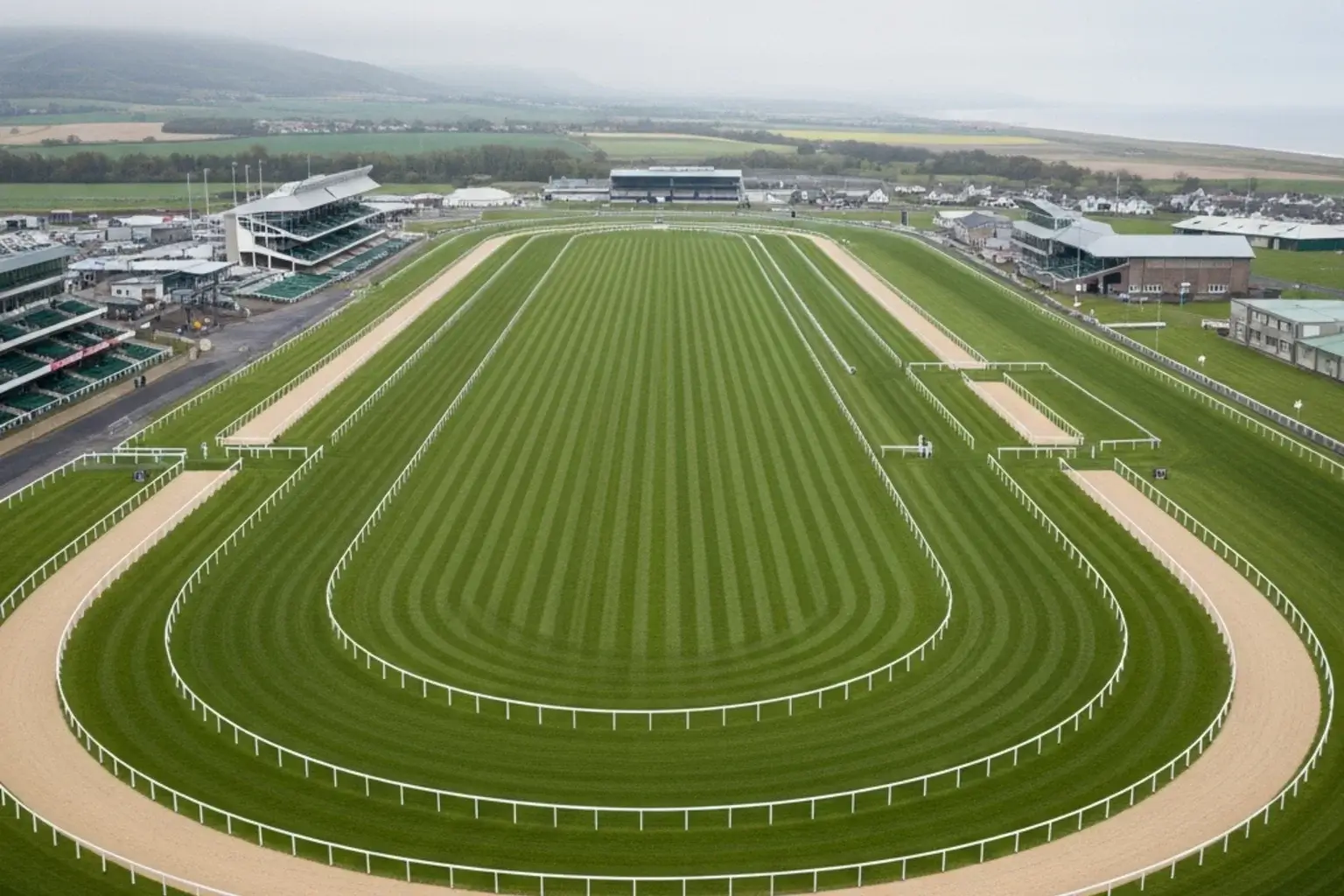
The flat course features a separate six-furlong straight that joins the round course at the final bend. This straight is where most sprint races begin, and its characteristics drive the draw bias patterns that make Ayr distinctive. There are three separate starting positions: centre track, stands side, and far side. Most UK courses have one or two positions; Ayr's three-position system creates tactical complexity that affects everything from pace scenarios to rail advantage. When the stalls are placed on the stands side, which happens in most sprint races with large fields, high-drawn runners gain proximity to the fresh ground along the rail. Centre and far-side placements shift the advantage entirely.
The National Hunt course shares much of the flat track but adds fences that test jumping ability rather than raw speed. The chase course is considered one of the fairer in Britain, with well-spaced fences and a long run-in that gives beaten horses a chance to rally. Scottish Grand National runners face three miles and seven furlongs over twenty-seven fences, a test of stamina that historically favours Irish-trained raiders accustomed to similar demands at tracks like Leopardstown and Punchestown.
Track Direction
Left-handed oval, approximately 12 furlongs in circumference with sweeping bends
Surface
Turf with sandy soil base providing superior drainage
Flat Course
Separate 6f straight joining round course at final bend; 3 stall positions available
National Hunt
Chase and hurdle courses sharing main track; 27 fences over SGN distance
Capacity
18,000 spectators across multiple enclosures
Ayr's position on the west coast creates conditions that set it apart from eastern tracks. The sandy soil base drains exceptionally well, meaning heavy ground is rare even after sustained rainfall. This matters because many horses in their autumn campaigns will have shown form on good or good-to-soft ground, and Ayr's natural drainage means that form often translates directly. By contrast, tracks with clay bases can turn into a different proposition after rain, rendering previous runs irrelevant. Punters who follow ground-dependent horses can rely on Ayr's consistency more than most venues.
The grandstand and enclosure facilities have been modernised over successive investments, but the racing experience retains a traditional character. Crowds at the Gold Cup meeting feel different from the corporate hospitality atmosphere at southern Premier meetings. This is not a criticism but an observation: Ayr attracts serious racing enthusiasts alongside newcomers, and that mix creates betting markets where local knowledge competes with metropolitan money. When 263 horses were entered for the 2025 Gold Cup and only 25 could run, the process of elimination required understanding which trainers target the race specifically rather than using it as a secondary option after York or Doncaster.
Scotland's racing economy has been growing faster than the national average. According to Scottish Racing projections, the industry's economic impact could reach £513.6 million by the mid-2020s, sustaining approximately 3,720 jobs. Ayr sits at the centre of this growth trajectory. Understanding the racecourse means understanding not just the physical characteristics but the human infrastructure around it: the trainers who target the track, the jockeys who ride it best, and the patterns that repeat because the conditions favour particular approaches.
The Flagship Races: Gold Cup, Scottish Grand National and Beyond
Two races define Ayr's place on the British racing calendar. The Ayr Gold Cup, run each September during the Western Meeting, carries the largest prize fund for a sprint handicap anywhere in Europe. The Scottish Grand National, staged in April, ranks as the fourth most-bet race in the United Kingdom after Aintree's Grand National, the Cheltenham Gold Cup, and the Epsom Derby. Understanding what makes each race distinctive is essential before considering betting approaches.
The Ayr Gold Cup: Europe's Premier Sprint Handicap
The Gold Cup is a six-furlong cavalry charge for handicappers, run over the straight course with fields routinely maxing out at twenty-five runners. The 2025 edition attracted 263 entries for those 25 spots, demonstrating how seriously trainers take the race. Prize money stands at £180,000, with the winner collecting approximately £92,772. For a handicap sprint, that figure eclipses equivalents at even the most prestigious southern meetings.
History matters here because the Gold Cup has been run since 1804, establishing patterns that persist into the modern era. The sprint has grown progressively more competitive as northern trainers have invested in specialist sprinters capable of competing with southern raiders. One statistic captures the recent shift: Karl Burke, training out of Middleham, finished first, second, and third in the 2024 Gold Cup with Lethal Levi, Silky Wilkie, and Korker respectively. No trainer had ever occupied all three podium places before. Lethal Levi's winning time of 1:07.75 was the fastest recorded in at least two decades, confirming that the modern Gold Cup is faster and more competitive than ever.
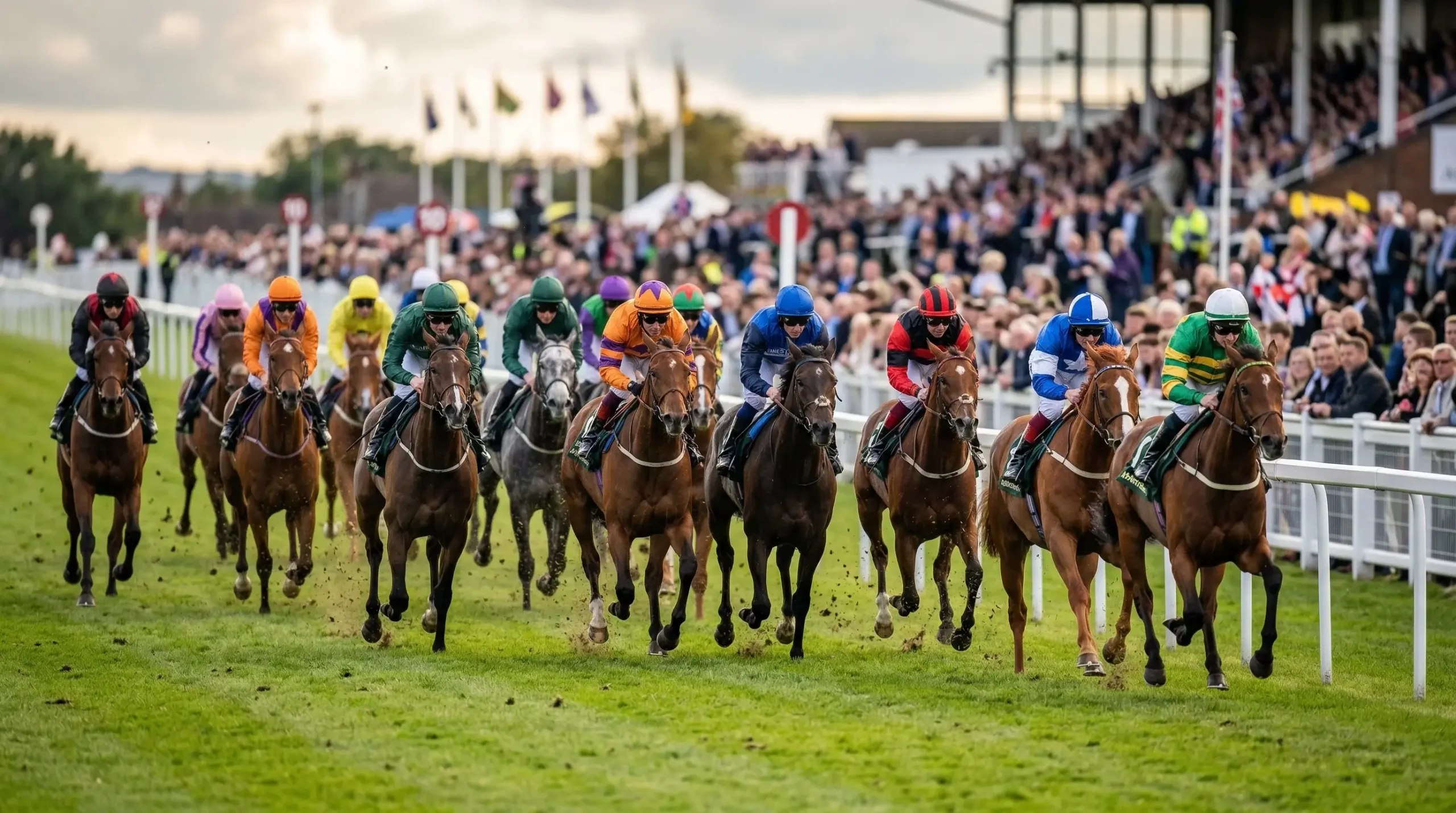
The betting market for the Gold Cup reflects its unpredictability. Over the last 24 runnings from 2000 to 2024, only four favourites have won. A one-pound stake on the favourite in every renewal would have returned a loss of approximately four pounds, representing a 20% deficit on total outlay. For bettors, this means the Gold Cup demands contrarian thinking: backing the obvious choice rarely pays, and the skill lies in identifying overlooked runners with the right profile.
The Scottish Grand National: Stamina and Survival
If the Gold Cup is about explosive speed, the Scottish Grand National tests the opposite quality. The race covers three miles and seven furlongs over twenty-seven fences, making it one of the longest and most demanding National Hunt races in the calendar. In the 2025 running, only eight of twenty-three starters completed the course, a completion rate that illustrates the stamina and jumping ability required.
Prize money has increased substantially in recent years. The 2025 Scottish Grand National offered £200,000 in total, with £112,540 going to the winner. That figure represents a significant uplift from the £150,000 available just a few years earlier, and it has attracted stronger fields. Willie Mullins, the Irish champion trainer, won back-to-back renewals with Macdermott in 2024 and Captain Cody in 2025, becoming the first Irish-based trainer to achieve consecutive victories and only the second trainer overall since Paul Nicholls did so with Vicente in 2016-2017.
Irish dominance in this race is a pattern worth noting. Eight of the fifteen winners from 2011 to 2025 were trained in Ireland, reflecting the emphasis Irish yards place on staying chasers compared to their British counterparts. When assessing the Scottish Grand National market, the question often becomes not whether Irish runners will be competitive, but which ones carry the right profile. The course rewards horses that have proven they stay extreme distances and jump reliably under pressure, qualities tested at Leopardstown's Christmas meeting and Punchestown in spring.
Supporting Cast: Silver Cup, Bronze Cup, and National Hunt Features
The Gold Cup meeting spans three days and includes races that function as trials or consolation prizes for the main event. The Silver Cup and Bronze Cup are sprint handicaps over similar distances, often featuring runners that narrowly missed the Gold Cup cut or are being prepared for future campaigns. Smart bettors watch these supporting races to identify emerging form that might translate to the following year's Gold Cup.
On the National Hunt side, Ayr hosts the Scottish Champion Hurdle during the April meeting, providing a target for two-mile hurdlers that have missed out on Cheltenham glory or need a slightly less demanding test. The grade of competition at these supporting races has improved as prize money has grown, making them worthwhile betting opportunities in their own right rather than mere supporting acts.
Draw Bias Essentials: Where Stall Position Wins Races
Draw bias at Ayr is both more significant and more complicated than at most British courses. The complication comes from the three-stall positioning system: depending on field size, conditions, and race type, stalls can be placed on the stands side, in the centre of the track, or towards the far side. Each position changes which draws offer an advantage, which means blindly following general advice about high or low stalls will lead you astray.
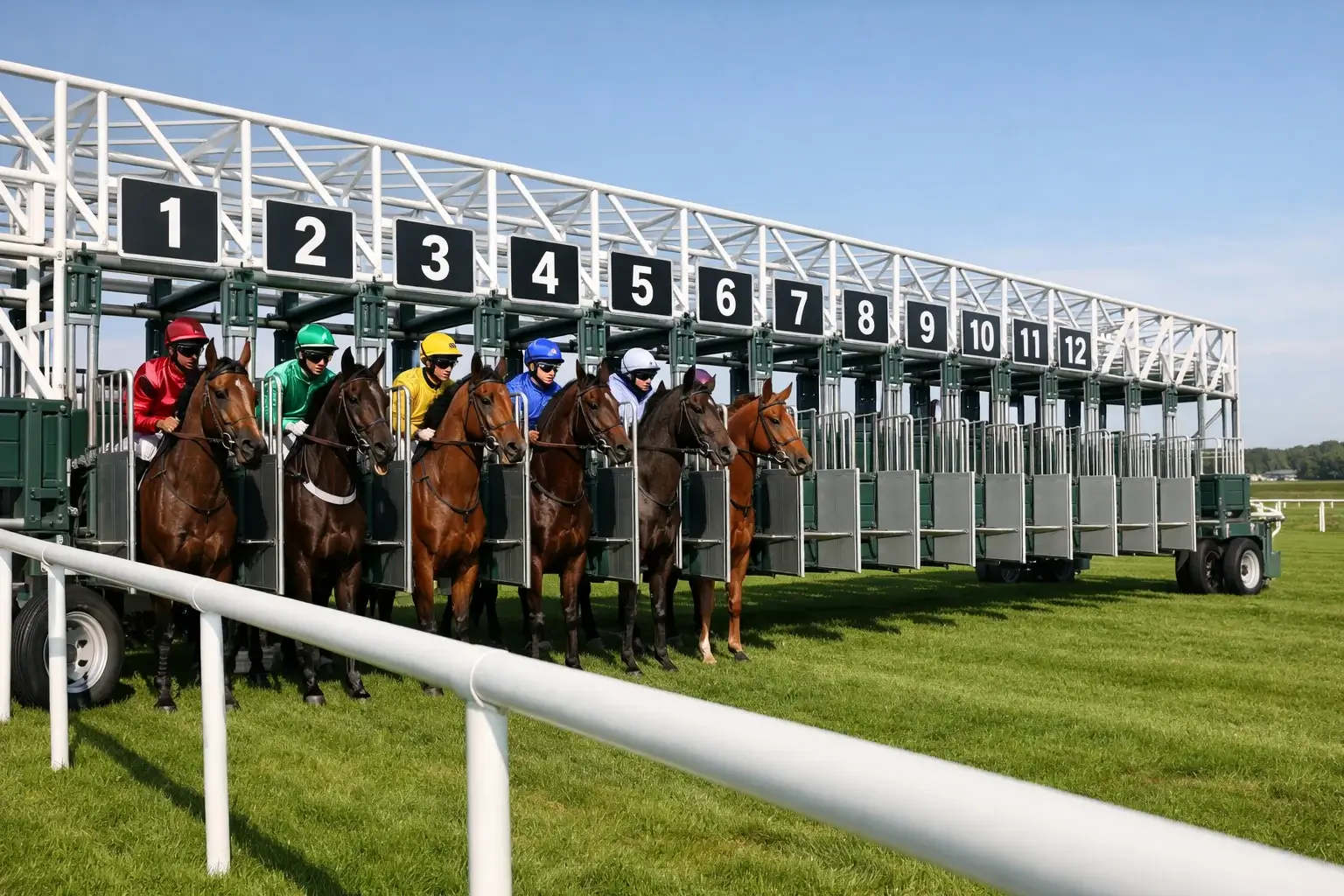
For sprint races on the straight six-furlong course, stalls are typically positioned on the stands side when fields are large. In this configuration, runners from high-numbered stalls break closest to the stands rail, where the ground is usually fresher and the racing line shortest into the home straight. This explains the most-cited Gold Cup statistic: 71% of winners over the last 24 runnings came from high stalls, defined as double-figure berths. Looking at a narrower window, 15 of the last 16 Gold Cup winners started from stall eight or higher. That concentration of success is not coincidence but physics: the combination of a straight course, large field, and stands-side stalls creates a structural advantage for high-drawn runners.
In Gold Cup conditions with 20+ runners and stalls on the stands side, high draws have won 71% of races since 2000. For punters, this means eliminating low-drawn runners from serious contention unless going conditions shift dramatically.
Distance Matters: 5f, 6f, 7f, and Beyond
The five-furlong course at Ayr shows the most extreme bias. According to DrawBias.com analysis, approximately two-thirds of winners come from the lower half of the draw. Runners from stalls ten and higher produced just two wins from 77 starts over five seasons, a strike rate so poor that backing them blindly would have lost 79 pence for every pound staked. At this distance, low-drawn horses benefit from saving ground on the turn into the straight and avoid the traffic problems that plague high-drawn runners in smaller fields.
Six furlongs is where most of Ayr's premier sprints take place, including the Gold Cup. Here the bias is distance-dependent but also ground-dependent. On good or good-to-firm going with fields of twelve or more, high draws maintain their advantage because the stands rail remains the preferred racing line. On soft or heavy ground, the pattern reverses. Analysis of twenty races on soft or heavy ground with fields of twelve-plus runners showed only two winners from high stalls, compared to ten from low stalls and eight from middle stalls. The ground causes the rail to ride slower, pushing jockeys towards fresher going in the centre, which neutralises the structural advantage of high draws.
At seven furlongs and beyond, draw bias effectively disappears. Analysis of 170 handicap races from 2009 to 2020 showed near-equal distribution of winners across low, middle, and high draws. The longer distance allows runners time to find position regardless of starting stall, and the sweeping turns at Ayr mean no single rail offers decisive advantage over the full trip. For bettors, this means seven-furlong and one-mile races require focus on form and jockey tactics rather than stall statistics.
Reading the Stall Configuration
The practical difficulty is knowing which stall position will be used before the day. Ayr's clerk of the course determines stall placement based on ground conditions, weather forecasts, and field size. In general, large sprint fields on good ground get stands-side stalls, while smaller fields or testing ground might see centre or far-side placement. Following the official Ayr Racecourse announcements and clerk of the course reports in the days before major meetings gives you the information needed to apply draw bias data correctly.
Without that information, the safest approach for Gold Cup betting specifically is to assume stands-side stalls and prefer runners from stall eight or higher. The probability of that configuration for the feature race is high enough that building a shortlist around high-drawn runners, then adjusting if announcements suggest otherwise, produces better outcomes than ignoring draw entirely.
Draw bias does not exist in isolation. Ground conditions interact with stall positioning in ways that can flip the expected advantages entirely.
Going Conditions: Why Ayr Drains Better Than Most
Ayr's location on the Ayrshire coast creates weather patterns distinct from inland and eastern tracks. The west coast receives consistent rainfall, but the track's natural characteristics compensate in ways that affect every betting calculation.
The sandy soil base beneath the turf provides natural drainage that few British courses can match. Water moves through sand far more efficiently than through clay, which means Ayr rarely reaches heavy ground even after prolonged wet spells. For punters who track going preferences, this translates to reliable conditions: a horse that needs good ground can run at Ayr with reasonable confidence that genuine good ground will be available, whereas the same horse might face unsuitable conditions at tracks where clay traps moisture.
The September Gold Cup meeting typically sees ground described as good or good to soft. The Western Meeting falls before autumn rains have saturated the ground, and even when showers arrive during the week, Ayr's drainage keeps conditions consistent. The spring Scottish Grand National meeting faces more variable weather, but even then, the track handles moisture well. National Hunt trainers targeting the SGN can prepare horses for good to soft ground as a baseline expectation, adjusting only if an unusually dry or wet spell changes the forecast.
Going and Draw Interaction
The relationship between going and draw bias is inverse at six furlongs. On good ground, high draws dominate because the stands rail rides true. On soft or heavy ground, low and middle draws become competitive as horses seek fresher ground away from the rail. Monitoring going reports throughout race week allows you to adjust draw bias expectations accordingly.
Wind is an underappreciated factor at Ayr. Prevailing westerlies off the Irish Sea can create headwind or tailwind conditions on the straight course depending on direction. A strong headwind into the finish favours hold-up horses that conserve energy, while a tailwind benefits front-runners who maintain speed through the final furlong. Checking weather forecasts for wind direction on race day, and adjusting pace assessments accordingly, adds a layer of analysis that most casual bettors ignore.
The combination of drainage quality and coastal exposure means that Ayr conditions require specific monitoring rather than assumption. The official going report, published on race morning and updated as conditions change, remains the authoritative source. But understanding why Ayr tends towards certain going types, and how that interacts with other variables like stall position, gives you interpretive tools that a raw going report cannot provide.
Trainer and Jockey Highlights: Names That Dominate
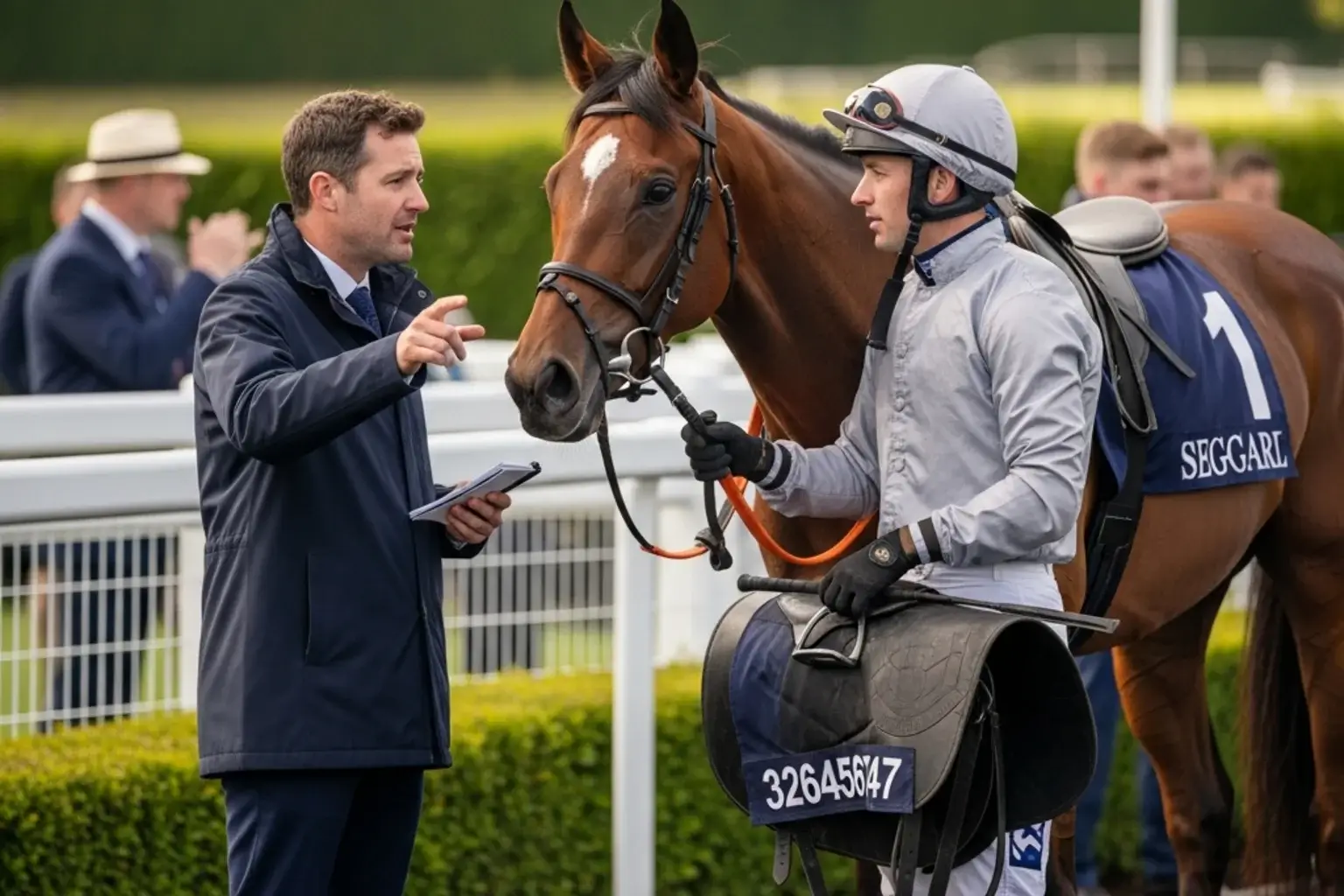
Certain trainers target Ayr with intent. Understanding who they are, why they succeed, and how to spot their runners in form separates informed betting from guesswork.
Flat Specialists: The Northern Powerhouses
Karl Burke operates out of Spigot Lodge in Middleham and has established himself as the dominant flat trainer at Ayr over recent seasons. His 2024 Gold Cup trifecta—finishing first, second, and third with Lethal Levi, Silky Wilkie, and Korker—was unprecedented in the race's two-century history. Burke targets the meeting specifically, bringing multiple runners to give himself several chances in the handicap mazes. When a Burke horse appears in the Gold Cup declarations at a price, it warrants serious consideration regardless of market rank.
Kevin Ryan, also based in Yorkshire, has won the Gold Cup five times since 2007. His success rate at the meeting exceeds his overall strike rate, suggesting he has identified what works at Ayr and consistently applies those principles. Ryan runners in Ayr sprints tend to come from draws he prefers and with jockeys who have ridden the course before. The combination of course knowledge and deliberate targeting makes his entries worth tracking.
The pattern extends beyond these two names. Northern trainers generally outperform at Ayr because they race there more frequently during the season, developing understanding of the track's quirks. Southern raiders occasionally land a big prize, but the winners' list skews towards yards within a few hours' drive of the course.
National Hunt: Mullins and the Irish Contingent
Willie Mullins dominates National Hunt racing across Britain and Ireland, and the Scottish Grand National has become one of his regular targets. His back-to-back victories in 2024 and 2025 confirmed that he takes the race seriously despite running horses across multiple meetings in April. When Mullins enters a runner for the SGN, it typically signals genuine intent rather than speculative entry.
Irish trainers collectively have won eight of the last fifteen Scottish Grand Nationals, a dominance that reflects differences in training philosophies. Irish yards emphasise stamina and jumping ability, producing horses suited to the SGN's extreme demands. Gordon Elliott, Henry de Bromhead, and Gavin Cromwell have all landed the race in the past decade, and any of their runners in future editions deserve respect regardless of market price.
Scottish Trainers: Home Advantage
The last Scottish-trained winner of the Ayr Gold Cup came in 1975, when Nigel Angus won with Roman Warrior. That drought, now exceeding fifty years, reflects the concentration of top flat talent in Yorkshire and Newmarket rather than any deficiency in Scottish training. However, Scottish trainers compete effectively at the SGN meeting and in National Hunt races throughout the season.
Lucinda Russell, based in Kinross, has won multiple Grade 1 races and regularly runs horses at Ayr across the jumps season. She captured the sentiment of Scottish racing when she noted: "We have great trainers up in the north, just as good as the ones in the south. But we need big winners to attract the owners because that is what it comes down to at the end of the day." Her runners at Ayr often carry home advantage—horses accustomed to Scottish conditions and transport logistics—that can make the difference in tight finishes.
Jim Goldie, Keith Dalgleish, and other Scottish-based trainers target Ayr throughout the year. Their strike rates at the track often exceed their overall performance, validating the theory that familiarity with a course translates to competitive edge. When assessing betting markets, a Scottish trainer entering a fancied runner at Ayr warrants the same attention as a Burke or Ryan runner.
Peter Scudamore, eight-time champion jockey, has observed: "There is a real sense of pride in what is being achieved. The standard of training is phenomenally high." The quality of northern and Scottish training has caught up with southern establishments, and Ayr is where that quality frequently demonstrates itself.
Jockey Considerations
Course specialists exist among jockeys as well as trainers. Connor Beasley, Paul Mulrennan, and James Sullivan have strong records at Ayr across flat racing, understanding the draw nuances and pace dynamics that determine sprint outcomes. In National Hunt, Brian Hughes and Craig Nichol ride the course regularly and have accumulated knowledge that helps when races get tactical over fences.
For bettors, the combination of trainer and jockey matters most. A Burke runner partnered by a jockey with course experience is a stronger proposition than the same horse ridden by someone unfamiliar with Ayr's idiosyncrasies. Checking booking patterns—which jockeys trainers prefer at Ayr specifically—can highlight whether a runner is being given every chance or sent as a speculative entry.
The professionals who dominate at Ayr operate within a broader market context that shapes opportunities and constraints for every punter.
The Betting Landscape: UK Market Context for Ayr
Understanding the broader UK betting market helps contextualise why Ayr presents the opportunities it does. The market has shifted substantially in recent years, and those shifts affect everything from odds availability to value persistence.
Total betting turnover on British horse racing reached £8.73 billion in the 2023-24 fiscal year, according to Gambling Commission data. That figure represents a decline of 16.3% over three years from the £10 billion recorded in 2021-22. When adjusted for inflation, the real decline approaches 26%, or roughly £3 billion in purchasing power. The contraction is not evenly distributed: everyday racing has suffered more than flagship meetings, and certain tracks have seen steeper declines than others.
Richard Wayman, Director of Racing at the British Horseracing Authority, has been direct about the cause. Addressing the 2024 figures, he stated: "I have no doubt that the drop was headed by the impact of affordability checks." These regulatory measures, requiring operators to verify that customers can afford their wagering levels, have reduced betting volume particularly among higher-staking punters. The top 1% of horse racing bettors, approximately 60,000 individuals, generate 52% of bookmaker revenue from the sport. When affordability checks constrain their activity, the effect on overall turnover is dramatic.
For ordinary bettors, the practical implications are mixed. Reduced liquidity in some markets means odds can move more sharply as money arrives. At the same time, bookmakers competing for a smaller pool of active customers have improved promotions and odds on selected races. Ayr's flagship meetings benefit from this dynamic: the Gold Cup and Scottish Grand National attract enough attention to maintain competitive markets, while less prominent fixtures at the track might see thinner odds and faster drift.
The Levy Paradox
Despite falling betting turnover, the Horserace Betting Levy Board recorded a levy yield of £108.9 million in 2024/25—the highest since the levy system was reformed in 2017. This counterintuitive result reflects changes in how the levy is calculated and the relative resilience of high-turnover markets. The record levy enables sustained investment in prize money, which in turn supports the quality of racing at venues like Ayr.
Prize money growth matters for bettors because it affects field quality. When the Gold Cup offers £180,000 and the winner takes home over £90,000, trainers target the race with their best-prepared sprinters rather than treating it as a consolation prize. HBLB allocated £72.7 million to prize money in 2025, an increase on the previous year, ensuring that flagship handicaps retain competitive fields even as the broader market contracts.
The shift towards fewer but higher-quality bets aligns with what Ayr demands. This is not a track where volume betting on every race produces returns. Instead, the opportunity lies in identifying the handful of situations where draw bias, trainer patterns, and market inefficiency align. A bettor who places ten informed bets across the Gold Cup meeting, rather than fifty speculative punts, will likely fare better in the current market structure.
One additional consideration: the rise of unlicensed betting sites has drawn regulatory attention. Data from the International Federation of Horseracing Authorities suggested a 522% increase in visits to unlicensed operators between 2021 and 2024. While most readers will be using licensed UK bookmakers, the existence of this parallel market affects odds formation and information flow. Sticking with licensed operators ensures access to customer protections, responsible gambling tools, and genuine recourse if disputes arise.
Strategy Foundations: Building Your Ayr Betting Approach
Data-driven insights for smarter race-day bets require a framework that turns information into action. The principles below apply specifically to Ayr but reflect broader truths about successful race betting.

The Draw Filter
Start every sprint handicap assessment at Ayr by eliminating runners whose draw works against them. For Gold Cup conditions—large field, stands-side stalls, good ground—this means deprioritising anything drawn lower than stall six. The 71% strike rate for high stalls is too dominant to ignore. If after applying this filter you have eliminated your preferred selection, trust the data over your form reading. Over sufficient sample sizes, structural disadvantages outweigh individual merit.
The filter changes with distance and going. At seven furlongs and beyond, ignore draw entirely and focus on form. On soft or heavy ground at six furlongs, flip the filter to favour low and middle draws. Keeping track of Ayr's stall positions announcement, usually made two days before racing, allows you to adjust your filter before finalising selections.
Trainer Intent Signals
Not every entry represents a serious tilt at the prize. Learning to distinguish trainers who target Ayr from those using it as an afterthought improves selection quality. Burke, Ryan, and other regular visitors typically arrive with horses showing recent work, fit from recent runs, and partnered by jockeys they use at the track. A first entry from a southern trainer whose horses have not run for six weeks may be speculative rather than optimistic.
Check how many runners a trainer has at the meeting. Multiple entries suggest planned campaigns; single entries might indicate last-minute opportunity-seeking. Neither approach is inherently wrong, but the former correlates with trainer confidence while the latter sometimes represents hopes rather than expectations.
Each-Way Value in Big Fields
The Gold Cup's twenty-five runner fields and similar Ayr handicaps create each-way opportunities that smaller races cannot match. With six places paid at one-fifth the odds for fields of sixteen or more, an each-way bet on a 16/1 shot returns profit even with a fourth-place finish. The mathematics favour each-way betting in precisely the conditions that Ayr's premier handicaps provide.
Seek horses at double-figure odds with profiles matching historical winners. Nine of the last twelve Gold Cup winners were aged four to six. Nine of twelve carried nine stone five pounds or less. Nine of twelve held Official Ratings between 95 and 104. A runner at 14/1 meeting all three criteria and drawn high offers better expected value than a 5/1 favourite that fails one of these tests.
Each-Way Calculation: Gold Cup Context
Suppose you back a 16/1 shot each way for £10 total (£5 win, £5 place). The place terms are 1/5 odds for six places.
If the horse wins: Win return = £5 × 16 + £5 stake = £85. Place return = £5 × (16 ÷ 5) + £5 stake = £21. Total return = £106. Profit = £96.
If the horse finishes 2nd-6th: Place return only = £21. Loss on win portion = £5. Net profit = £11.
If the horse finishes 7th or worse: Total loss = £10.
Each-way betting at this price point requires only a top-six finish roughly one in three times to break even, assuming the horse never wins. When the profile matches historical trends, the implied probability can exceed this threshold.
Bankroll Principles for Festival Betting
The Gold Cup and SGN meetings span multiple days with numerous betting opportunities. Allocating your entire stake to a single race, however strong your conviction, exposes you to the variance inherent in big-field racing. A more resilient approach divides your festival budget across several selections, accepting that some will lose but that winning at informed prices recovers losses and generates profit.
Consider a 2% stake per selection for the Gold Cup meeting, with a maximum exposure of 10% of your total bankroll across all racing. This leaves room for multiple bets across the three days while protecting against the scenario where your strongest fancies all disappoint. The discipline matters because large-field handicaps are unpredictable by nature; even correct analysis sometimes loses to random misfortune.
Timing Your Bets
Prices move throughout the days leading up to major Ayr races. Ante-post markets open weeks in advance and can offer value before trainers confirm their intentions. However, ante-post bets carry non-runner risk: if your selection fails to make the final field, most bookmakers will not return your stake.
A middle approach bets early when you identify value but hedges risk by reserving a portion of your stake for race-day betting. If your ante-post selection strengthens, the early price compensates for any shortening. If the horse drifts or becomes a doubt, the race-day stake can be redeployed elsewhere. The March 2026 Gold Cup ante-post market is active now; by September, early prices on eventual contenders may look generous.
Your Ayr Betting Questions Answered
What is the best draw for the Ayr Gold Cup?
High stalls have dominated the Ayr Gold Cup, with 71% of winners over the last 24 runnings starting from double-figure berths. When stalls are placed on the stands side for large fields on good ground, runners from stall eight and above gain proximity to the fresh ground along the rail. Fifteen of the last sixteen winners came from stall eight or higher. Low draws become competitive only when going turns soft or heavy, which shifts the advantage away from the stands rail.
Is Ayr a good track for favourites?
Favourites have a poor record in Ayr's premier handicaps. Only four favourites have won the Ayr Gold Cup in the last 24 runnings, a strike rate below 17%. Backing the favourite in every renewal would have produced a 20% loss on total stakes. The large fields and draw bias mean that market leaders often face structural disadvantages that outweigh their form credentials. The Scottish Grand National shows similar patterns, with outsiders regularly outperforming expectations.
Which trainers have the best record at Ayr?
Karl Burke and Kevin Ryan dominate Ayr's flat racing. Burke achieved an unprecedented first, second, and third in the 2024 Gold Cup. Ryan has won the Gold Cup five times since 2007. Both trainers target the meeting specifically and have developed understanding of the track's peculiarities. For National Hunt racing, Willie Mullins has won back-to-back Scottish Grand Nationals in 2024 and 2025, while Irish trainers collectively have won eight of the last fifteen renewals.
Staying in Control: Limits, Tools and Support
Betting on horse racing should be entertainment, not a source of financial stress. The information in this guide aims to help you make more informed decisions, but no strategy guarantees profit, and losses are part of the activity.
Set deposit limits before each meeting and stick to them regardless of outcomes. Chasing losses by increasing stakes typically compounds problems rather than solving them. All licensed UK bookmakers offer deposit limits, loss limits, and cooling-off periods through their responsible gambling tools. Using these features is not an admission of difficulty but a sensible precaution.
If you feel that gambling is becoming a problem, support is available. GamCare provides free counselling and support through their helpline and online resources. The National Gambling Helpline is available 24 hours a day, seven days a week. GAMSTOP allows you to exclude yourself from all UK licensed gambling websites for periods of six months, one year, or five years.
For anyone accompanying you to Ayr Racecourse, gambling is not a required part of the experience. The racing itself, the atmosphere, and the quality of competition offer enjoyment independent of whether you place a bet. Keep that perspective, and the occasions when careful analysis produces a winning selection become rewards rather than expectations.
