Ayr Racing History: From 1576 to Modern Day
 Available in US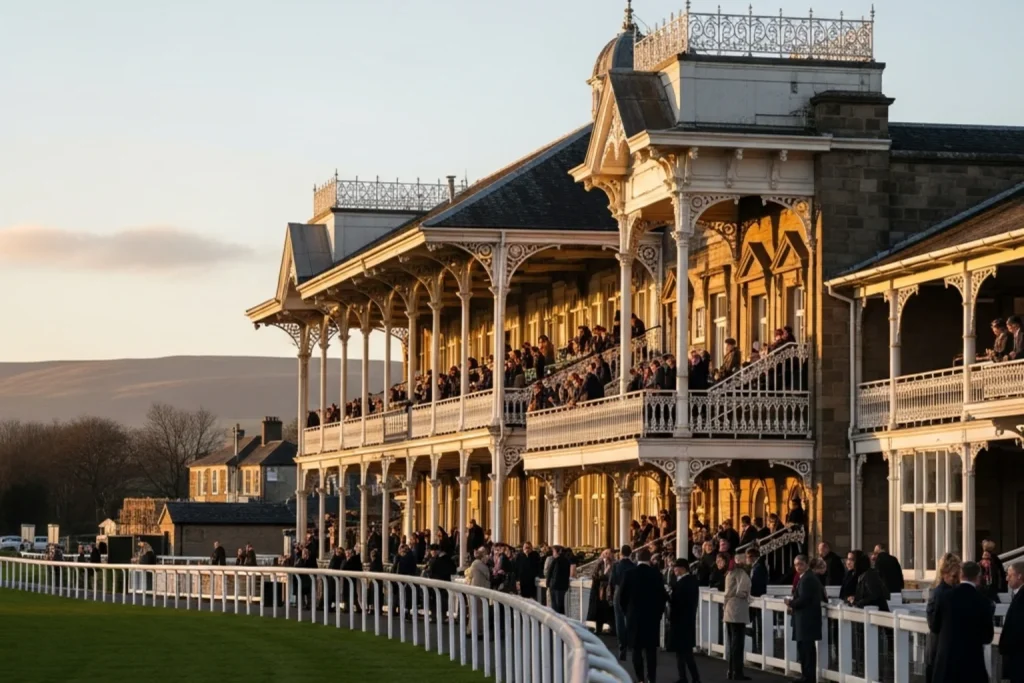
450 Years of Racing Heritage
Scotland’s racing heritage since 1576 finds its fullest expression at Ayr, where horses have competed for nearly half a millennium. The track’s evolution from informal local contests to Scotland’s only Grade 1 racecourse traces a path through centuries of social, economic and sporting change. Understanding this history adds context that enriches contemporary appreciation of racing at Scotland’s premier venue.
The longevity of racing at Ayr reflects deep connections between the sport and Scottish culture. Through wars, economic upheavals and countless social transformations, racing persisted in this corner of southwest Scotland, adapting to changing circumstances while maintaining continuity with traditions established by earlier generations. The modern racecourse inherits a legacy that few sporting venues can match.
This guide examines Ayr’s origins in the sixteenth century, traces the formalisation of racing through the Western Meeting Club, and charts the track’s development into the modern facility that today accommodates 18,000 spectators across 155 acres. History cannot be bet upon, but understanding it deepens engagement with racing that continues to build on foundations laid centuries ago.
The oldest prize still run is the Gold Cup.
Early Origins: Racing in 16th Century Ayr
Records indicate racing took place at Ayr as early as 1576, making it one of Britain’s oldest racing venues. These early contests bore little resemblance to modern racing, lacking the structure, regulation and formality that would develop over subsequent centuries. Horses competed in matches arranged between local landowners, with prizes reflecting the agricultural economy rather than substantial purses.
The location offered natural advantages that explained racing’s persistence. Relatively flat land near the coast provided suitable terrain for horses to gallop, while the town’s position as a trading centre brought crowds who added excitement and betting interest to competitions. These geographic and economic factors helped racing take root more deeply at Ayr than at other potential Scottish venues.
Seventeenth and eighteenth century developments gradually formalised proceedings. Fixed meeting dates replaced irregular scheduling, standard distances emerged from previously variable contests, and rules governing entries and conduct began establishing order from informality. Each incremental change moved racing at Ayr closer to the organised sport that would eventually emerge.
Local patronage sustained racing through periods when commercial support remained limited. Landowners and merchants who valued racing as entertainment and social occasion provided backing that maintained meetings when purely commercial operations might have ceased. This patronage tradition would eventually formalise into the institutional structures that govern racing today.
The main event they support is the Ayr Gold Cup.
Western Meeting Club: Formalising Excellence
The Western Meeting Club brought institutional rigour to Ayr racing, establishing the governance framework within which modern racing developed. The club’s formation marked a decisive step from informal gatherings toward organised sport, with membership providing stability that ad-hoc arrangements could not match. Through the club, Ayr’s racing acquired the permanence that enabled long-term development.
Prize money grew as the club attracted broader interest and greater resources. What began as modest local competitions evolved into fixtures capable of drawing quality horses from beyond Scotland. The increasing prizes raised competitive standards, creating cycles of improvement where better races attracted better horses that in turn attracted better prizes.
The Gold Cup emerged as the centrepiece of the Western Meeting, its prestige growing across decades until it became Europe’s richest sprint handicap. As Delly Innes, Chief Executive of Scottish Racing, has observed, by working closely with other local cultural and tourism assets, Scotland’s racecourses can potentially raise the economic impact of Scottish horseracing to nearly £540 million. The Gold Cup exemplifies how signature events drive economic value beyond their immediate prize funds.
National Hunt racing joined the Flat programme as jump racing developed during the nineteenth century. The Scottish Grand National would become the jumps equivalent of the Gold Cup, anchoring spring racing as the Gold Cup anchors autumn. Together, these flagship events established Ayr as a year-round racing destination rather than a seasonal venue.
Administrative developments professionalised operations. Permanent staff replaced volunteers, facilities improved beyond basic provision, and connections with national racing authorities integrated Ayr into broader governance structures. These institutional developments positioned the track to benefit from twentieth century modernisation that transformed British racing.
The wider context is set out in our Ayr betting guide.
Modern Era: Grade 1 Status and Beyond
Grade 1 classification represents the highest tier of British racecourse ratings, acknowledging facilities, fixtures and competitive quality that exceed most venues. Ayr’s achievement of this status confirmed its position as Scotland’s premier track, the only Scottish course meeting criteria that place it alongside Britain’s most prestigious venues.
Physical development transformed the racecourse across the twentieth century. Grandstands replaced earlier structures, training facilities expanded, and amenities improved to meet rising expectations. The 155-acre site accommodates modern requirements while preserving the racing character established across preceding centuries.
Attendance growth reflected broader social changes that brought racing to wider audiences. Scottish racing now attracts nearly 400,000 spectators annually across five racecourses, with Ayr commanding the largest share. This attendance base supports economic activity that extends far beyond the racecourse itself, benefiting hospitality, transport and retail sectors throughout the region.
Television coverage brought Ayr racing to national audiences who might never attend in person. The Gold Cup and Scottish Grand National feature prominently in racing calendars, their broadcast presence maintaining awareness and interest that sustains betting markets and commercial partnerships. Media exposure transformed regional fixtures into nationally significant events.
Contemporary challenges test the structures established across centuries. Betting market changes, regulatory pressures and shifting leisure patterns create uncertainties that require adaptation. Yet Ayr has navigated challenges before, and the resilience demonstrated across 450 years suggests capacity to manage whatever the future brings while maintaining the traditions that connect present racing to historical foundations.
Looking forward, Ayr’s historical position suggests continued prominence in Scottish racing. Four and a half centuries of racing create institutional depth that newer venues cannot match, while the track’s established fixtures and Grade 1 status provide foundations for future development. The heritage that began in 1576 continues evolving while retaining connections to origins that few sporting venues can claim.
The preservation of racing heritage matters beyond sentiment. Historical continuity creates traditions that attract visitors, distinguishes Ayr from purpose-built modern venues, and provides narratives that enhance engagement with contemporary racing. The stories accumulated across centuries enrich race-day experiences for those aware of the history unfolding beneath their feet.
Investment in historical documentation and interpretation helps transmit heritage to new generations. The racecourse and local archives hold materials that illuminate racing’s evolution at Ayr, and making these accessible supports appreciation of traditions that might otherwise fade from memory. Understanding the past enriches understanding of the present, connecting today’s races to foundations laid centuries ago.
The wider context is set out in our Ayr betting guide.
Racing Beyond the Wager
Historical perspective reminds us that racing’s appeal transcends betting. The sport offers spectacle, atmosphere and social connection that reward attention regardless of whether wagers are placed. If betting enhances enjoyment, stake responsibly; if it creates pressure, step back while still enjoying the racing. Support is available through GamCare and the National Gambling Helpline.
