
Ayr Gold Cup Betting: Draw Bias, Trends and Tips for Europe’s Richest Sprint Handicap
 Available in US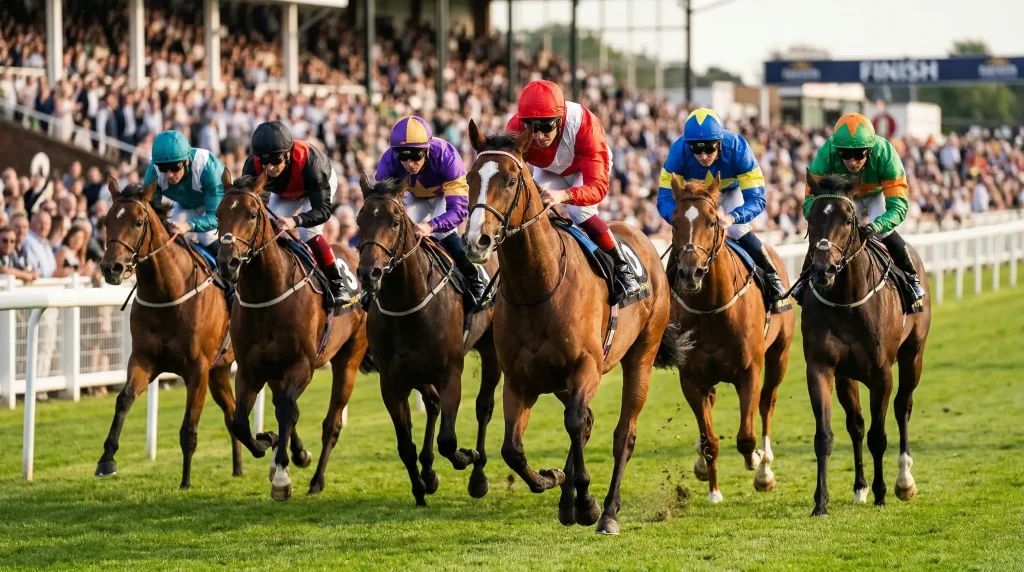
Europe’s Premier Sprint Handicap
Every September, a peculiar alchemy transforms Ayr Racecourse into the epicentre of European sprint handicapping. The Ayr Gold Cup draws twenty-five horses to a flat-out six-furlong dash worth £180,000, making it the richest sprint handicap on the continent. For punters, this race represents something rarer than prize money alone: a betting puzzle where statistical edges genuinely exist, provided you know where to look.
The Gold Cup sits at the heart of the three-day Western Meeting, a fixture that has crowned sprinting specialists since 1804. Yet most bettors approach the race armed with nothing more than tipster selections and a vague sense that draw matters. They lose money in predictable ways because they treat a 25-runner cavalry charge as if it were a five-horse conditions race. Different contests demand different analytical frameworks, and the Gold Cup rewards those who understand its specific architecture.
What sets the Ayr Gold Cup apart from other big-field handicaps is the convergence of measurable factors that actually influence outcomes. The draw bias here is not merely significant—it is statistically overwhelming when you examine two decades of data. Trainer dominance follows patterns that repeat with unusual consistency. Age, weight, and rating profiles cluster around values that should make selection far more systematic than the average punter realises.
The 2026 edition attracted 263 entries for those 25 places, a testament to the race’s pulling power among trainers who understand what it takes to win. This guide breaks down the data that separates informed Ayr Gold Cup betting from hopeful speculation. Whether you have followed this race for decades or are approaching it fresh, the statistics, trends, and strategic angles ahead will sharpen your approach to Europe’s premier sprint handicap.
The meeting around it is mapped in the festival guide.
Race Profile: Distance, Conditions and Prize Money
The Ayr Gold Cup is a Class 2 heritage handicap run over six furlongs on the flat course at Ayr. It takes place on the final day of the Western Meeting, typically the third Saturday of September, with a maximum field of 25 runners carrying weights determined by their British Horseracing Authority official ratings. The race is open to horses aged three years and older, though the data strongly favours runners in the middle of that range.
Prize money tells part of the story. The total fund stands at £180,000, with the winner collecting approximately £92,772 after deductions. This purse makes the Gold Cup the most valuable sprint handicap in Europe by some margin, drawing entries from across Britain and Ireland. The 2026 renewal saw 263 initial entries—more than ten horses competing for each place in the final field. Such depth of competition ensures that only genuine contenders make the cut, yet also means the race frequently produces results that confound the market.
The course itself shapes the contest. Ayr’s six-furlong straight is one of the fairest in Britain when fields are small, but the Gold Cup’s maximum capacity transforms it into something altogether different. Twenty-five horses charging towards the same finishing post creates natural traffic problems, and where a horse starts becomes as important as how fast it runs. The track’s slight undulations and the positioning of the stands-side rail add further layers to the tactical puzzle.
Ground conditions at the September meeting typically range from good to good-to-soft, though the west coast climate means soft patches are not unusual. Ayr’s sandy subsoil provides effective drainage, which tends to preserve decent racing ground even after rain. This matters for handicap sprinters: true heavy ground would favour different types of horses than those who thrive on faster surfaces. The course’s drainage means the going rarely deteriorates to extremes, keeping form lines more reliable than they might be elsewhere.
History and Prestige: From 1804 to the Modern Era
The Ayr Gold Cup first ran in 1804, making it one of the oldest surviving handicaps in British racing. For more than two centuries, it has served as the climax of the Western Meeting, a fixture that once rivalled Royal Ascot in social prestige among Scottish racing enthusiasts. The race has survived world wars, economic depressions, and the complete transformation of the betting industry while maintaining its position as the sprint handicap that northern trainers covet above all others.
History here carries a particular weight for Scottish racing. The last Scottish-trained winner of the Ayr Gold Cup was Roman Warrior, sent out by Nigel Angus back in 1975. That drought now stretches past fifty years—a statistic that troubles Scottish trainers annually and one that speaks to how the race has become dominated by powerful yards in the north of England. Every September, local trainers enter their best sprinters knowing the odds are stacked against them in more ways than one.
The roll of winning trainers reads like a who’s who of British handicap expertise. Names such as Mark Johnston, Richard Fahey, and the Hambleton Lodge contingent appear repeatedly through the decades. More recently, Karl Burke and Kevin Ryan have established dominance patterns that shape how bettors should approach the race. The Gold Cup rewards trainers who understand not just how to prepare a horse, but how to navigate the specific demands of a 25-runner cavalry charge at Ayr in September.
Prestige extends beyond the winner’s enclosure. The Ayr Gold Cup remains a race that owners genuinely want to win, a prize that carries more weight in northern racing circles than its official grading might suggest. This desire attracts better quality entries than a Class 2 handicap might otherwise command, which in turn creates betting markets with genuine depth and, for the astute punter, genuine opportunities.
The race’s evolution mirrors broader changes in British racing. What began as a regional sprint has become a nationally significant handicap that attracts attention from yards across the country. Yet the northern flavour persists—Ayr in September feels different from Ascot or Newmarket, with a crowd that understands its racing and appreciates the particular challenge of extracting speed from well-handicapped sprinters. That atmosphere contributes to the Gold Cup’s enduring appeal among punters who value substance over gloss.
Draw Bias Deep Dive: Why High Stalls Win
The draw bias in the Ayr Gold Cup is not a subtle trend that requires careful statistical interpretation. It is a dominant factor that has shaped the last two decades of results with unusual consistency. Of the last 24 winners between 2000 and 2026, seventeen came from double-figure stalls—a 71% strike rate that demands attention from any serious bettor. Narrow the window further and the pattern becomes even starker: 15 of the last 16 winners emerged from stall eight or higher, representing a 94% conversion rate that approaches certainty in a sport built on uncertainty.
Understanding why this happens requires knowledge of how Ayr configures its starting positions. Unlike most British racecourses, Ayr uses three distinct stall positions depending on the race: centre course, stands side, and far side. For the Gold Cup specifically, with stalls positioned towards the stands rail, horses drawn high gain a significant advantage. They can track across towards the near-side rail without losing ground, while low-drawn runners must either commit to racing on the far side or burn energy working across the course.
The dynamics of a 25-runner sprint amplify these effects. In smaller fields, jockeys have time and space to adjust positions. In a Gold Cup cavalry charge, the first furlong often determines which horses have clear running and which find themselves boxed in behind walls of competitors. High draws allow riders to establish position early, while low draws frequently condemn horses to racing in traffic where even talented sprinters struggle to show their true ability.
What makes this bias particularly useful for bettors is its persistence across different ground conditions and field compositions. Whether the going rides fast or soft, whether the field contains 20 runners or the maximum 25, the high-draw advantage holds firm. This is not a trend that ebbs and flows with circumstance—it is a structural feature of how the race unfolds. Incorporating draw position into your selections is not merely advisable for the Gold Cup; it is foundational to any rational approach.
The practical application is straightforward: weight your analysis heavily towards horses drawn in stalls eight and above. This does not mean ignoring low-drawn runners entirely, but it does mean recognising that a horse from stall two needs to be significantly better than a horse from stall fifteen to offer equivalent value. The numbers over two decades make this adjustment for you, provided you are willing to let them.
Jockey booking patterns often reflect this understanding. Watch how leading riders react to their draw allocations in the days before the race. A jockey who switches to a better-drawn horse, or a trainer who talks down expectations after drawing low, is communicating information that the market sometimes fails to process quickly. The professionals who make their living from sprint handicaps understand the draw dynamics intimately—following their behaviour can supplement the statistical case for favouring high numbers.
Trends and Statistics: Age, Weight, Rating Patterns
Beyond draw position, the Ayr Gold Cup produces consistent patterns in the type of horse that wins. Three profile markers—age, weight carried, and official rating—cluster around values that narrow the selection pool considerably. Over the last twelve renewals, nine winners fell within the four-to-six-year-old bracket. This is not merely a reflection of horse population in handicaps; it points to a sweet spot where runners have developed the maturity and race craft needed for the Gold Cup’s unique demands without having accumulated the racing miles that dull natural speed.
Weight carried tells a similar story. Nine of those twelve winners shouldered nine stone five pounds or less. The Gold Cup is a true handicap, meaning the British Horseracing Authority assigns weights to compress the field and give every runner a theoretical chance. In practice, the lower-weighted horses—those rated below the ceiling but given a realistic mark—find the race suits them better. Top weights must concede lumps to their rivals while navigating the same traffic problems, a combination that proves difficult to overcome.
The official rating band offers perhaps the most actionable insight. Nine of the last twelve winners carried ratings between 95 and 104. Horses rated above 105 often find themselves burdened with prohibitive weights, while those below 95 may lack the raw class needed for such a competitive handicap. The 95-104 window represents the intersection of ability and opportunity—horses good enough to win but not so highly rated that the handicapper loads them down.
Market performance provides a useful reality check on these trends. Only four favourites won the Ayr Gold Cup between 2000 and 2026. That represents a strike rate below 17%, producing a loss of roughly four pounds for every pound staked on favourites over the period. The betting public consistently overestimates the chances of short-priced runners in this race, creating systematic value further down the market for those who understand where winners actually come from.
Combining these trend factors with draw position creates a powerful filtering mechanism. A four-to-six-year-old rated between 95 and 104, carrying under nine stone five, and drawn in stall eight or higher matches the profile of recent winners far more closely than the average Gold Cup runner. Finding such horses in the betting market at prices that reflect their genuine chances is the core challenge of profitable Gold Cup betting.
Recent form deserves consideration alongside these profile markers. Winners typically arrive at the Gold Cup in good heart, often having run competitively in their previous two or three starts without necessarily winning. The race suits horses who have been active rather than freshened, suggesting that trainers use preparatory runs to sharpen their contenders. Horses returning from long absences or dropping down after disappointing efforts in better company rarely prosper in the Gold Cup’s demanding environment.
The full picture is in our Ayr betting guide.
Trainer Dominance: Burke, Ryan and the Northern Powerhouses
The Ayr Gold Cup has become a near-private competition among a handful of northern powerhouse trainers. Karl Burke and Kevin Ryan have accumulated records in this race that demand attention from anyone attempting to find the winner. Their combined success is not accidental—it reflects systematic approaches to sprint handicaps that translate particularly well to the specific demands of the Gold Cup.
Karl Burke’s 2026 achievement stands alone in the race’s 220-year history. He saddled the first three home—Lethal Levi, Silky Wilkie, and Korker—a clean sweep that no trainer had previously managed. Lethal Levi’s winning time of 1:07.75 was the fastest recorded in two decades, a mark that speaks to Burke’s ability to produce horses at peak fitness for this particular afternoon. When a trainer dominates so completely, it cannot be dismissed as coincidence. Burke understands something about preparing sprinters for Ayr that most competitors do not.
Kevin Ryan’s record stretches further back but remains equally compelling. Five Ayr Gold Cup victories since 2007 make him the defining trainer of the race across the modern era. Ryan’s Hambleton Lodge operation specialises in sprinters, and the Gold Cup represents the pinnacle of his season in the same way that Group 1 races define other yards. His horses arrive at Ayr with their campaigns built around this specific target, a focus that produces results.
The broader northern training contingent benefits from geographical familiarity with Ayr. Trainers in Yorkshire and the north of England send horses to the Scottish track more frequently than their southern counterparts, building knowledge of the course, the ground, and the idiosyncrasies that affect sprint results. This accumulated experience compounds over seasons, creating institutional advantages that are difficult for occasional raiders to overcome.
“The standard of training is phenomenally high,” observed Peter Scudamore, the eight-time champion jockey turned racing pundit, when discussing the northern training centres. That standard shows nowhere more clearly than in the Gold Cup, where Burke and Ryan have turned a prestigious handicap into something approaching a benefit match for their stables. For bettors, the implication is straightforward: runners from these yards deserve respect that extends beyond what their official ratings suggest.
Beyond the headline names, the broader pattern holds that northern trainers understand this race. Tim Easterby, David O’Meara, and Richard Fahey have all saddled Gold Cup winners or placed horses in recent years. These yards share certain characteristics: large strings that allow them to identify and develop sprint handicappers, experience of Ayr gained through regular raiding, and an understanding of how to prepare horses for this specific challenge. Identifying entries from these stables and treating them seriously is a sensible starting point for any Gold Cup analysis.
Betting Angles: Spotting Value in 25-Runner Fields
The Ayr Gold Cup offers structural advantages for bettors willing to exploit its statistical patterns. With 25 runners and a market that consistently underestimates the role of draw position, value tends to congregate in specific areas of the betting. Understanding where that value lies separates systematic punters from those who rely on tips and intuition.
Opposing favourites represents the first practical angle. The four winners from 24 favourites between 2000 and 2026 produced substantial losses for favourite backers, but that same data implies the market systematically underbets horses further back in the betting. The Gold Cup is chaotic by design: 25 horses, draw bias, traffic problems, and the compressed weights of a heritage handicap all conspire against predictability. Embracing that chaos through wider selections makes more sense than attempting to identify a single correct answer in a race that resists such certainty.
Each-way betting deserves particular attention given the field size. Standard each-way terms for 25-runner handicaps typically pay one-fifth the odds for places, extending to fourth or fifth depending on the bookmaker. This creates potential value on horses between 8/1 and 20/1 who match the trend profile: high draw, appropriate age and weight, rated in the 95-104 band, trained by specialists in the race. The place portion of such bets cushions losses while the win portion captures full value when selections come home.
Timing your bets matters in a race that attracts substantial market interest. Odds on fancied runners typically contract as the race approaches, while outsiders drift. Bettors who identify trend-matching selections early—ideally after the draw but before major market moves—can capture better prices than those who wait until race day. Conversely, watching market movements for late money can identify horses that connections fancy more than their odds suggest.
Bankroll discipline becomes critical in races of this nature. A 25-runner handicap where favourites underperform will produce long losing runs for any staking approach. Flat stakes representing a small percentage of total betting bank—typically between one and three percent—allow punters to survive the inevitable dry spells while capturing profits when trend-matching selections land. The Gold Cup rewards patience, preparation, and the restraint to stake appropriately for an inherently uncertain event.
Combining multiple trend factors into selection criteria helps narrow the field. A shortlist of four or five horses who match draw, age, weight, rating, and trainer criteria will contain the winner more often than random selection from 25 runners. Spreading stakes across this shortlist, rather than concentrating on a single selection, acknowledges the race’s complexity while giving punters multiple routes to profit on Gold Cup afternoon.
Price awareness matters more in the Gold Cup than in races with smaller fields. With 25 runners, the average horse has roughly a four percent chance of winning before we consider form, ability, or conditions. Any horse priced at less than 10/1 is the market suggesting it outperforms that baseline substantially—a claim that requires scrutiny against the trend data. Conversely, horses in the 14/1 to 25/1 range who match multiple trend criteria may offer genuine value, since the market struggles to assess all 25 runners with equal precision.
Weather monitoring in the days before the race can provide a final edge. While Ayr’s drainage typically preserves good ground, significant rain would shift the advantage towards low draws on soft going—a reversal of the standard pattern that catches casual bettors unaware. Following official going reports and adjusting selections accordingly demonstrates the kind of flexible, data-informed approach that the Gold Cup rewards.
Betting Within Your Limits on Gold Cup Day
Betting on horse racing should remain an enjoyable form of entertainment rather than a financial strategy. The information in this guide is designed to improve understanding of the Ayr Gold Cup and its betting dynamics, but no system or approach can guarantee profits. Racing outcomes involve substantial uncertainty, and even well-researched selections will lose more often than they win in any given race.
If you choose to bet on the Ayr Gold Cup or any other racing event, set a budget beforehand and treat it as the cost of entertainment. Never chase losses by increasing stakes after unsuccessful bets. If gambling stops being enjoyable or begins causing concern about money, time spent, or emotional wellbeing, organisations such as GamCare, BeGambleAware, and the National Gambling Helpline provide free, confidential support for UK residents.
All licensed UK bookmakers offer tools to help manage gambling activity, including deposit limits, loss limits, time-outs, and self-exclusion through the GAMSTOP scheme. Using these tools proactively is a sign of responsible gambling, not a mark of weakness. The best bet you can make is one you can afford to lose entirely.
