
Ayr Draw Bias Explained: The Three-Stall System That Changes Everything
 Available in US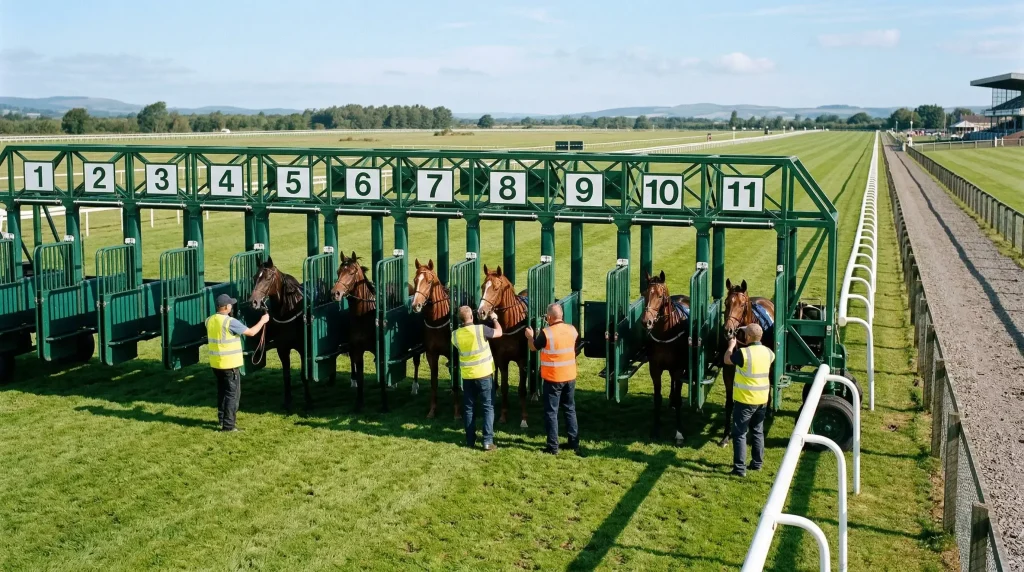
Why Draw Matters More at Ayr
Draw bias exists at every flat racecourse in Britain, but Ayr operates on a different level entirely. While most tracks show marginal advantages for certain stall positions that clever bettors can exploit at the margins, Ayr’s draw bias represents a structural feature of racing that fundamentally shapes outcomes. Understanding the three-stall system that changes everything at this Scottish venue transforms how you assess sprint handicaps and, more importantly, where you find value in the betting markets.
The numbers tell a story that demands attention. At five furlongs, two-thirds of winners emerge from the top half of the draw. At six furlongs on soft ground with large fields, low draws dominate to an even greater degree. Yet extend the trip to seven furlongs or a mile, and the bias effectively disappears. This is not random variation—it reflects the physical configuration of Ayr’s track and how races unfold depending on where stalls are positioned and which part of the course horses are asked to race on.
What makes Ayr unusual among British racecourses is the use of three distinct starting stall positions: centre course, stands side, and far side. Most tracks use one or two positions; Ayr’s three-option system creates complexity that rewards those who understand it while punishing casual bettors who ignore draw implications. The course clerk’s decision about where to place stalls on any given day interacts with ground conditions, field size, and distance to produce patterns that are predictable once you know what to look for.
This guide breaks down Ayr’s draw bias by distance, examines how going conditions modify the baseline patterns, and applies the analysis specifically to the track’s flagship race, the Ayr Gold Cup. The goal is not to provide tips but to build understanding that you can apply independently whenever Ayr racing appears on the card. Draw position is one factor among many, but at this particular venue, it often proves decisive.
Beyond seven furlongs it fades: 7f and 1m draw bias.
The Three-Stall System: Centre, Stands, Far Side
Ayr Racecourse uses three distinct positions for starting stalls, a configuration that sets it apart from the majority of British flat tracks. This system is not merely administrative—it fundamentally shapes how races are run and which horses gain advantages from their starting positions. Understanding the three-stall system is the foundation for interpreting draw data at Ayr.
The centre position places stalls in the middle of the track, allowing horses to race towards either rail or maintain a central path. This configuration is typically used for smaller fields or conditions races where draw bias matters less because horses have room to find their preferred racing line without interference. When stalls are placed centrally, the data shows minimal advantage for either high or low draws, as jockeys can adjust their positions relatively easily in the opening furlong.
The stands-side position places stalls towards the near rail, closest to the grandstands and the main viewing area. This configuration creates significant advantages for horses drawn high, who can race against the stands rail without expending energy crossing the course. The stands rail at Ayr often provides the fastest racing surface, particularly in sprint races, because ground near the stands tends to be better preserved than the middle of the track or the far side where drainage can be less effective.
The far-side position places stalls towards the opposite rail, away from the grandstands. When stalls are positioned here, low draws gain the advantage because they can race against the far rail while high-drawn horses must cross the course or race in isolation on the unfavoured side. This configuration appears less frequently than stands-side positioning but creates equally pronounced biases when it is used.
The course clerk decides stall positioning based on ground conditions, recent weather, and which part of the track is riding fastest on any given day. This decision is typically announced the day before racing and confirmed on race morning, though adjustments can occur if conditions change overnight. Serious bettors monitor these announcements because they provide crucial context for interpreting draw data.
What makes Ayr’s system particularly impactful is the combination of three positions with a straight sprint course that offers minimal opportunity for horses to recover from poor starts. At tracks with significant bends, horses drawn unfavourably can use the turns to improve position. Ayr’s sprints run straight from start to finish, meaning early advantages persist throughout the race. A horse who secures the rail from a favourable draw can often maintain that position to the finish, while rivals drawn badly must either race wide, burning extra energy, or accept running in traffic behind the leaders.
Distance Breakdown: 5f, 6f, 7f, 1m Analysis
Draw bias at Ayr varies dramatically depending on race distance. The shortest trips show the strongest effects, while longer distances progressively neutralise the advantage of starting position. This pattern reflects basic racing physics: the less distance horses cover, the less opportunity exists to overcome an early positional disadvantage.
Five Furlongs: Extreme Bias Territory
The five-furlong sprint at Ayr produces the most pronounced draw bias of any distance at the track. When stalls are positioned on the stands side, high draws dominate to a degree that defies random chance. Analysis shows that approximately two-thirds of winners emerge from the top half of the draw, with horses racing towards the stands rail consistently outperforming those forced to race on the unfavoured side of the course.
The statistics become even starker when examining specific stall ranges. Over the past five seasons, horses drawn in stall ten or higher recorded just two winners from seventy-seven runners—a strike rate so poor that it produced losses of approximately sixty-one pounds for every hundred staked. This is not marginal underperformance; it represents a systematic disadvantage that renders many runners virtually impossible to back profitably regardless of their ability.
The five-furlong bias stems from the combination of short distance and straight course. Horses have roughly sixty seconds to cover the trip, leaving no time to recover from a bad start or work into a better position. Jockeys know this, which is why you see high-drawn horses in stands-side races immediately angle towards the near rail, establishing position in the first furlong that they defend to the finish.
Six Furlongs: The Gold Cup Distance
Six furlongs represents the most important distance for Ayr betting because it hosts the track’s flagship race, the Ayr Gold Cup. The draw bias at this trip remains significant but shows more nuance than the five-furlong pattern, particularly in how it interacts with ground conditions.
On good or faster ground, the six-furlong bias mirrors the five-furlong pattern, with high draws favoured when stalls are positioned on the stands side. The extra furlong provides slightly more time for horses to find position, but not enough to overcome a significant draw disadvantage in large fields. The Ayr Gold Cup, with its maximum field of twenty-five, amplifies these effects because traffic problems compound the basic positional disadvantage.
Ground conditions modify the pattern materially. On soft or heavy going with fields of twelve or more runners, the data shows a reversal: only two winners from twenty emerged from high stalls in such conditions. Softer ground appears to favour the far side of the track at Ayr, possibly because drainage patterns leave that section of the course in better condition when rain has affected the racing surface. This interaction between draw and going represents crucial information for Gold Cup betting, where September weather can produce anything from good to soft conditions.
Seven Furlongs: The Transition Zone
At seven furlongs, Ayr’s draw bias begins to fade significantly. Analysis of 170 handicaps with eight or more runners between 2009 and 2020 shows effectively no meaningful bias—winners emerge from low, middle, and high draws in roughly equal proportions. This neutrality reflects the additional distance giving horses time and opportunity to overcome starting position disadvantages.
The seven-furlong trip at Ayr includes a bend, unlike the straight five and six-furlong courses. This configuration allows jockeys more tactical options: they can use the turn to improve position, drop in behind leaders to save ground, or switch off the rail when the racing line opens up. These options compress the advantage that favourable draws provide at shorter trips, making ability and tactics more important than starting position.
One Mile: Bias Disappears
At one mile, draw bias at Ayr effectively disappears. The combination of distance, course configuration with its bends, and the time available for horses to settle into racing positions means that starting stall becomes largely irrelevant to finishing position. Bettors can effectively ignore draw when assessing mile races at Ayr, focusing instead on form, going preferences, and trainer patterns.
The contrast between one-mile neutrality and five-furlong extremity illustrates why draw analysis must be distance-specific. A bettor who applies the same draw framework across all distances at Ayr will make systematic errors—overvaluing draw at longer trips where it does not matter, or undervaluing it at sprint distances where it proves decisive. Matching analytical approach to race distance is fundamental to profitable Ayr betting.
The full picture is in our Ayr betting guide.
Going Interaction: How Ground Changes Everything
Draw bias at Ayr does not operate independently of ground conditions. The interaction between stall position and going produces patterns that can reverse the standard expectations, catching casual bettors unaware while rewarding those who track these dynamics systematically. Understanding how ground modifies draw bias is essential for anyone betting seriously on Ayr sprints.
On good or faster ground, the standard pattern applies: high draws benefit when stalls are on the stands side because the racing surface near the grandstand rail typically provides the fastest and most consistent footing. The ground maintenance team focuses resources on the stands side because it is most visible to spectators and cameras, and because horses tend to race there most frequently. This institutional focus creates a self-reinforcing pattern where the stands rail offers advantages that smart jockeys exploit.
When rain affects the track, these dynamics shift. Ayr’s sandy subsoil provides effective drainage that prevents the worst extremes of heavy ground, but soft conditions still develop during wet spells. On softer going, the far side of the track often rides better than the stands side, possibly because drainage patterns differ across the width of the course or because the far side receives less traffic and therefore less damage to the racing surface.
The six-furlong statistics illustrate this reversal clearly. In handicaps with twelve or more runners on soft or heavy ground, low draws significantly outperform high draws—the opposite of the pattern on good ground. This reversal is substantial enough to transform race dynamics entirely: horses who would struggle from high draws on good ground become well positioned on soft, while horses favoured by high draws on faster surfaces find themselves disadvantaged when the rain arrives.
Monitoring official going reports becomes crucial for applying draw analysis correctly. The going is declared the morning before racing and can change throughout the day, particularly in Scotland where weather is variable. Bettors who check going reports and adjust their draw expectations accordingly gain an edge over those who apply static assumptions regardless of conditions.
The interaction also affects pace scenarios. On soft ground, early speed becomes more demanding because horses expend greater energy maintaining position. This can favour hold-up horses who conserve energy early and produce finishing efforts when leaders tire. Combined with draw positioning, these pace dynamics create complex selection puzzles that reward deep analysis.
Seasonal patterns provide additional context. Spring meetings at Ayr more frequently encounter soft ground following winter rainfall, while September meetings for the Gold Cup can range from good to soft depending on autumn weather. Tracking historical going patterns for specific meetings helps establish baseline expectations that bettors can then adjust based on current forecasts and declarations.
Gold Cup Draw: The High-Stall Phenomenon
The Ayr Gold Cup represents the ultimate expression of draw bias in British sprint handicapping. With twenty-five runners, maximum prize money, and two centuries of heritage, this race concentrates all the factors that make draw decisive at Ayr into a single six-furlong cavalry charge. The statistics from recent decades paint a picture that should fundamentally shape how bettors approach Europe’s richest sprint handicap.
Between 2000 and 2026, seventeen of twenty-four Ayr Gold Cup winners emerged from double-figure stalls—a 71% strike rate from the high draw positions. Narrow the analysis to the most recent sixteen winners, and the pattern strengthens further: fifteen came from stall eight or higher, representing a 94% conversion rate. These numbers do not reflect marginal advantage; they represent dominance that should disqualify most low-drawn horses from serious consideration.
The Gold Cup’s maximum field amplifies draw effects that exist at smaller field sizes. With twenty-five horses breaking from the stalls simultaneously, traffic problems become inevitable. Horses drawn low must either commit to racing on the far side—often the slower part of the track in September—or attempt to cross towards the stands rail while dodging rivals. Neither option is attractive, and the statistics suggest both consistently fail.
Why does the high-stall bias persist so consistently in the Gold Cup? Several factors combine to create this pattern. First, the stalls are typically positioned towards the stands side for the feature race, immediately advantaging high draws. Second, the ground in September usually rides good or good-to-soft, conditions that favour the stands rail. Third, the sheer number of runners means that any early positional advantage compounds as the race unfolds—horses who secure favourable positions in the first furlong maintain them, while those caught in traffic rarely extract themselves in time.
For bettors, the Gold Cup draw bias provides unusual clarity in an otherwise complex handicap. Rather than trying to identify the best horse from twenty-five possibles, sensible analysis first filters by draw position. A shortlist of horses drawn in stalls eight or higher will contain the winner roughly nineteen times out of twenty based on recent history. From that filtered group, traditional form analysis can then identify which runners offer the best value.
The bookmaking industry has gradually absorbed this draw bias into Gold Cup pricing, but not completely. High-drawn horses who match other winning trends—age, weight, trainer record—often trade at prices that underestimate their chances, while low-drawn horses sometimes attract sentimental support that keeps their odds shorter than the draw data warrants. This persistent inefficiency creates opportunities for draw-aware bettors.
Practical Application: Using Draw Data in Bets
Understanding draw bias theoretically is only valuable if it translates into better betting decisions. This section provides a practical framework for applying draw data to Ayr races, from initial race assessment through to final selection and staking.
Begin every Ayr sprint assessment by establishing the stall position. Check official announcements from the racecourse, typically available the day before racing. Stands-side positioning favours high draws at five and six furlongs on good ground. Far-side positioning favours low draws. Centre positioning reduces draw impact significantly. Without this foundational information, any draw analysis proceeds from incomplete premises.
Next, check the going report and weather forecast. If the ground reads soft or heavier, consider whether the standard draw pattern may reverse—particularly at six furlongs where the soft-ground data shows low draws outperforming. If significant rain is forecast between declaration time and race time, factor in potential going changes that could shift draw dynamics.
Create a draw-based shortlist before examining form. At five furlongs with stands-side stalls, focus primarily on horses drawn one through seven or eight. At six furlongs, extend the favourable zone slightly but maintain draw awareness. At seven furlongs and beyond, treat draw as a secondary factor rather than a primary filter. This approach prevents wasting analytical effort on horses whose draw position makes them unlikely winners regardless of ability.
Within your draw-filtered shortlist, apply standard form analysis: recent performances, going preferences, trainer and jockey patterns, weight carried, and any other factors you typically consider. The draw filter does not replace form analysis—it focuses it on runners who can realistically win given the track configuration on that particular day.
When assessing prices, remember that the market partially incorporates draw bias but not perfectly. Horses who face draw disadvantages may trade at odds that overestimate their chances, while those with favourable draws may offer value because the market has not fully adjusted. Look for discrepancies between your draw-adjusted assessment and the betting market’s pricing.
Staking should reflect the additional certainty that draw bias provides in some races. When draw data strongly supports a selection—for example, a well-drawn horse in the Gold Cup who also matches age and weight trends—slightly larger stakes may be justified because the edge is more measurable than in races where form alone drives selection. Conversely, when draw factors are ambiguous, smaller stakes acknowledge the reduced analytical certainty.
Keep records of how draw-based selections perform. Over time, this data will show whether your application of draw bias principles produces profitable results or requires adjustment. The patterns described in this guide represent historical data that should persist given the track’s physical characteristics, but verification through your own results provides confidence that the approach works in practice.
Finally, integrate draw analysis with your existing betting methodology rather than treating it as a standalone system. Draw bias is one factor among many at Ayr—trainer form, jockey bookings, going preferences, and recent performance all contribute to a horse’s chances. The most effective approach combines draw awareness with these other factors, using stall position as a filter that narrows the selection pool while form analysis identifies the best bets within that filtered group.
When Data Meets Discipline
Draw bias analysis provides a framework for informed betting, but no statistical edge guarantees profits. Horse racing involves inherent uncertainty, and even well-supported selections will lose more often than they win. The information in this guide should improve understanding of Ayr’s racing dynamics, not create expectations of inevitable success.
Set a betting budget before any race meeting and stick to it regardless of results. Never chase losses by increasing stakes, and never bet with money you cannot afford to lose entirely. If betting on racing stops being enjoyable or begins causing concern about finances or wellbeing, help is available through GamCare, BeGambleAware, and the National Gambling Helpline.
All UK-licensed bookmakers provide responsible gambling tools including deposit limits, loss limits, time-outs, and self-exclusion through the GAMSTOP scheme. Using these tools is a sensible precaution, not an admission of problems. The best application of draw bias knowledge is one that enhances entertainment value while maintaining complete financial control.
