
Ayr Ante-Post Betting: Early Odds and Market Moves
 Available in US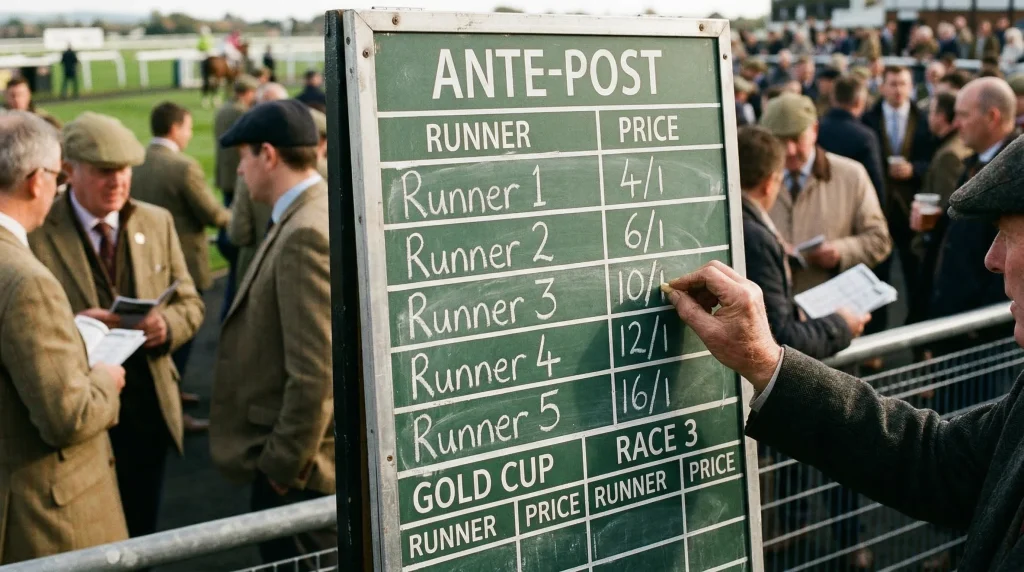
The Case for Early Bets
Ante-post betting on Ayr’s major races offers opportunities for locking in value before the market moves. The Ayr Gold Cup and Scottish Grand National attract substantial betting interest, and prices available weeks or months before these events often exceed what bookmakers will offer once final fields emerge. Understanding when and how to engage ante-post markets can produce better returns than waiting for raceday prices.
The trade-off involves risk. Ante-post bets typically lose stakes if horses do not run, unlike day-of-race wagers that return money when selections are withdrawn. This risk premium explains why early prices can be more generous than later ones, but it also creates scenarios where backing non-runners wastes stakes entirely. Managing this risk while capturing available value defines successful ante-post betting.
This guide examines ante-post strategies for both the Ayr Gold Cup and Scottish Grand National, identifies optimal timing for market engagement, and explains risk management techniques that protect bankrolls while pursuing early value. The discipline of ante-post betting differs from raceday wagering, but the potential rewards justify developing expertise in this specialised approach.
Prices are compared in odds comparison for Ayr races.
Gold Cup Ante-Post: Timing Your Move
Gold Cup ante-post markets open months before the September race, with initial prices reflecting broad assessments of horses that might eventually contest the handicap. The 2026 edition attracted 263 entries for just 25 starting positions, illustrating the uncertainty that early markets must price. Most entered horses will not ultimately run, creating opportunities and pitfalls for ante-post punters.
Early-season prices offer the largest potential returns but carry the highest risk. Horses entered in spring for September handicaps face months of training, racing and potential setbacks before reaching Ayr. Injuries, loss of form, weight reassessments and connections’ changing plans all reduce the probability that early entries actually contest the Gold Cup. Prices reflect genuine uncertainty rather than exploitable inefficiency.
Mid-season betting, typically July through August, balances risk and reward more favourably. By this point, serious contenders have demonstrated current-season form, trainers have clarified their intentions, and the handicapper has assigned ratings that determine weight allocations. Horses still face potential issues before September, but the path to the Gold Cup becomes clearer and prices adjust accordingly.
The final weeks before the race see prices compress toward their raceday levels. Non-runner risk diminishes as declarations approach, but so do pricing advantages. The optimal window for ante-post Gold Cup betting typically falls between the publication of weights and final declarations, when field composition becomes predictable but prices have not yet fully adjusted to certainty.
Monitoring price movements reveals market intelligence. Horses whose prices shorten steadily across the ante-post period often attract informed support from connections or well-connected observers. Those whose prices drift may have encountered issues that public form has not yet revealed. Tracking movements identifies where confidence concentrates and where doubt emerges.
SGN Ante-Post: Winter Market Patterns
Scottish Grand National ante-post betting follows different rhythms than the Gold Cup. The race’s April timing means ante-post markets develop through winter, when National Hunt racing provides regular form updates and staying chasers demonstrate their current wellbeing. The £200,000 prize fund attracts quality entries, ensuring competitive markets throughout the ante-post period.
Winter jumping results directly inform Scottish Grand National prices. Horses that win staying chases between November and February attract market support that shortens their April prices. Those that disappoint or encounter issues see odds drift. Unlike Flat ante-post betting, where months separate form displays from target races, jumps ante-post markets continuously incorporate fresh information.
The Cheltenham Festival, held two weeks before the Scottish Grand National, creates significant market disruption. Some horses run at Cheltenham with Ayr as a secondary target; others skip Cheltenham specifically to arrive fresh. Cheltenham results reshape Scottish Grand National markets dramatically, with disappointed horses drifting and impressive performers shortening. The festival creates both risk and opportunity for ante-post punters.
Irish entries warrant particular attention given their historical dominance. When leading Irish trainers confirm runners for the Scottish Grand National, their horses typically attract support that compresses prices quickly. Securing ante-post prices on Irish entries before confirmation announcements captures value that evaporates once stable intentions become public.
Risk Management: Non-Runners and Refunds
Non-runner no-bet offers transform ante-post risk profiles. Some bookmakers offer terms that refund stakes if selected horses do not run, eliminating the principal risk that discourages ante-post engagement. These offers typically feature less generous prices than standard ante-post terms, but the reduced risk may justify accepting slightly shorter odds.
Without non-runner protection, stake allocation becomes critical. Concentrating significant stakes on single ante-post selections exposes bankrolls to total loss when horses are withdrawn. Spreading smaller stakes across multiple selections reduces variance, accepting that some bets will fail while increasing the probability that at least one selection reaches the race.
Monitoring stable communications helps manage non-runner risk. Trainers who discuss Gold Cup or Scottish Grand National ambitions in interviews signal commitment that reduces withdrawal probability. Those who remain noncommittal may be testing market interest or keeping options open. Following racing media for trainer quotes provides intelligence that informs ante-post confidence.
Setting stake limits for ante-post betting protects against the extended timeframes involved. Money committed to September Gold Cup bets in January remains locked for eight months regardless of outcome. Ensuring that ante-post stakes represent only portions of overall bankrolls prevents overcommitment that could compromise other betting activity through the intervening period.
Hedging opportunities sometimes arise as races approach. If an ante-post selection shortens significantly, laying the horse on betting exchanges can lock in profit regardless of race outcome. Alternatively, if the selection drifts, additional backing at longer prices lowers the effective odds of the overall position. Understanding hedging mechanics allows punters to manage positions actively rather than simply awaiting results.
The discipline of ante-post betting differs from raceday wagering. Quick results do not arrive; positions require patience across weeks or months. Emotional attachment to selections can cloud judgement, encouraging additional backing or reluctance to hedge when circumstances change. Treating ante-post bets as positions to manage rather than simple wagers to await improves decision-making throughout the period from placement to race.
Record-keeping matters for ante-post betting. Tracking which selections at what prices remain live, what potential payouts they represent, and how positions have changed through hedging or additional bets maintains clarity that memory alone cannot provide. Spreadsheets or betting apps that track open positions help punters understand their total ante-post exposure and manage bankrolls accordingly.
Finally, recognising when ante-post engagement offers genuine edge versus when it merely represents early gambling without advantage improves results. Early prices are not automatically better than later prices; they are simply different, reflecting different information sets and risk profiles. Engaging ante-post markets deliberately, when analysis suggests prices underestimate chances relative to non-runner risk, produces better outcomes than betting early for its own sake.
The wider context is set out in our Ayr betting guide.
Ante-Post Stakes Locked Away
Ante-post betting locks up stakes for extended periods and carries non-runner risk that raceday betting avoids. Only bet what you can afford to lose entirely, and recognise that even well-researched ante-post wagers frequently fail. If gambling creates financial pressure, support is available through GamCare and the National Gambling Helpline.
