
Ayr Gold Cup Festival: The Western Meeting Guide
Scotland’s Premier Flat Festival
The Ayr Gold Cup Festival, traditionally known as the Western Meeting, delivers three days of world-class sprint action each September. Centred on the Gold Cup itself, a six-furlong handicap carrying a prize fund of £180,000, the festival draws quality sprinters from across Britain and Ireland to compete on Scotland’s premier Flat track. For punters, the meeting offers concentrated betting opportunities with multiple competitive handicaps across each afternoon’s card.
The Western Meeting dates back to 1824, when the Western Meeting Club was established to professionalise racing at Ayr. That institutional heritage shapes the modern festival’s character, blending tradition with contemporary commercial pressures. The club’s founding members could not have imagined satellite betting or live television coverage, yet the core appeal remains unchanged: watch fast horses contest valuable prizes on well-prepared ground during the final weeks of the Flat season.
Ayr stages approximately 32 racing days across the calendar year, but the Gold Cup Festival stands apart. The concentration of quality, the size of fields and the intensity of betting interest create an atmosphere unlike regular fixtures. Trainers point their best handicap sprinters toward September, knowing that a Western Meeting victory delivers both prize money and prestige. Understanding the festival’s structure helps punters allocate their attention and stakes across three demanding days of racing.
Festival Structure: Day-by-Day Breakdown
The Gold Cup Festival runs Thursday through Saturday during the third or fourth week of September. Each day presents a distinct character, building toward Saturday’s feature race while offering competitive action throughout. Punters who understand the daily rhythm can identify where value concentrates and which races demand the closest attention.
Thursday opens proceedings with a solid card that lacks the Gold Cup’s star power but delivers genuine betting races. Handicaps over various distances test horses that may progress to weekend features, while trainers use the day to finalise preparations for their Gold Cup contenders. The smaller crowds and less frenetic betting markets on Thursday sometimes create value that disappears by Saturday. Those willing to engage early often find better prices before the weekend rush.
Friday raises the stakes with stronger cards and bigger fields. The Silver Cup, a valuable sprint handicap in its own right, anchors the afternoon alongside supporting races that attract quality entries. Friday’s winners often represent Gold Cup possibles that either lacked the rating for Saturday’s showpiece or were kept fresh by connections who preferred a more realistic target. The day’s results inform Saturday betting, as runners demonstrate current form and ground preferences on the same track they will face 24 hours later.
Saturday brings the Gold Cup itself, typically scheduled as the feature race in the early afternoon slot that attracts maximum television coverage. The supporting card includes the Bronze Cup and other competitive handicaps, ensuring that Saturday delivers sustained action rather than a single peak. Fields are largest, stakes highest and crowds at their most intense. Every race carries significance for punters seeking to capitalise on the festival’s culmination.
Supporting Races: Silver Cup, Bronze Cup and More
The Silver Cup and Bronze Cup provide substantial prizes for horses that fall just short of Gold Cup standard. The Silver Cup typically runs over six furlongs on Friday, offering a consolation prize for runners whose ratings placed them outside the main event’s cut-off. Its fields regularly include horses that entered the Gold Cup but could not secure a run, alongside those specifically targeted at the lesser contest. Form from the Silver Cup sometimes proves predictive for the following year’s Gold Cup, as improving types demonstrate their ability before graduating upward.
The Bronze Cup completes the trilogy on Saturday, usually scheduled before the Gold Cup to build afternoon momentum. This handicap attracts entries from the deepest end of the rating spectrum, horses with ability but insufficient marks to compete in the Gold Cup’s rarefied band. The race often produces longer-priced winners because the betting public focuses its attention on the day’s feature, leaving value in the supporting card for those who do their homework across all races.
Beyond the named cups, each festival day features additional handicaps over sprint and middle distances. Maiden and novice events give unexposed types opportunities to win on a prestigious stage, while conditions races test quality without the handicapper’s levelling influence. Nurseries for two-year-olds add another dimension, their juvenile participants often providing less predictable results than mature handicappers. The cumulative effect is a three-day programme that rewards punters who engage fully rather than cherry-picking only the headline races.
For each-way bettors, the supporting races sometimes offer better structural value than the Gold Cup itself. Smaller fields in certain contests mean fewer place spots but less competition for those positions, while the concentration of public money on the day’s feature can leave supporting handicaps underbet and therefore mispriced. Approaching the festival as a whole, rather than fixating solely on the Gold Cup, often produces better long-term results.
Festival Atmosphere: What to Expect
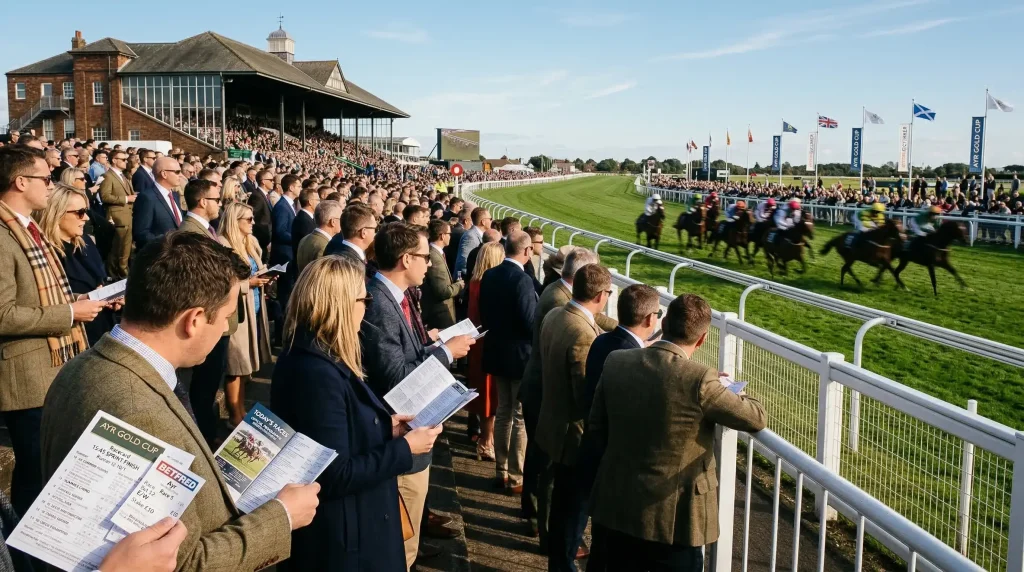
The Western Meeting creates an atmosphere distinct from regular Ayr fixtures. Saturday’s Gold Cup day draws crowds that fill the 18,000-capacity venue with energy unusual for Scottish racing. The betting rings buzz with activity as punters seek final prices before each off; the parade ring fills with spectators assessing runners with varying degrees of expertise. For those attending in person, the sensory experience rivals any festival outside Cheltenham or Royal Ascot.
Racegoers dress for the occasion. While Ayr lacks Ascot’s formal dress codes, the Gold Cup attracts visitors who treat the day as a social occasion warranting corresponding attire. The Premier Enclosure offers the best viewing positions and access to weighing room areas, while the Grandstand Enclosure provides solid facilities at lower prices. Hospitality packages sell out weeks in advance, reflecting corporate interest in Scotland’s flagship Flat fixture.
The betting experience intensifies during festival days. On-course bookmakers compete aggressively for trade, sometimes offering better prices than exchange markets in an attempt to attract custom. The tote pools swell with money, particularly on the Gold Cup itself, creating place dividends that can exceed expectations for each-way punters. Those comfortable with course betting find advantages unavailable to remote participants, though the difference has narrowed as mobile technology allows real-time price comparison from anywhere within the venue.
Weather varies in late September. The west coast position exposes Ayr to Atlantic systems that can bring rain without warning, though the track’s sandy drainage typically maintains safe ground regardless. Attending punters should prepare for variable conditions, bringing layers that can adapt to sunshine, showers or persistent drizzle. The track remains operational in conditions that would force abandonment at less well-drained venues, so bad weather rarely affects the festival’s running, even if it adjusts going conditions in ways that punters must incorporate into their assessments.
Festival Betting Discipline
Festival days intensify betting pressure through multiple races and heightened atmosphere. Set daily limits before arriving and track your spending across the three-day programme rather than treating each day in isolation. The excitement of the Gold Cup should enhance your experience, not create financial strain. If betting feels like an obligation rather than entertainment, support is available through organisations such as GamCare and the National Gambling Helpline.