
Ayr National Hunt Betting: Jumps Racing Insights
 Available in US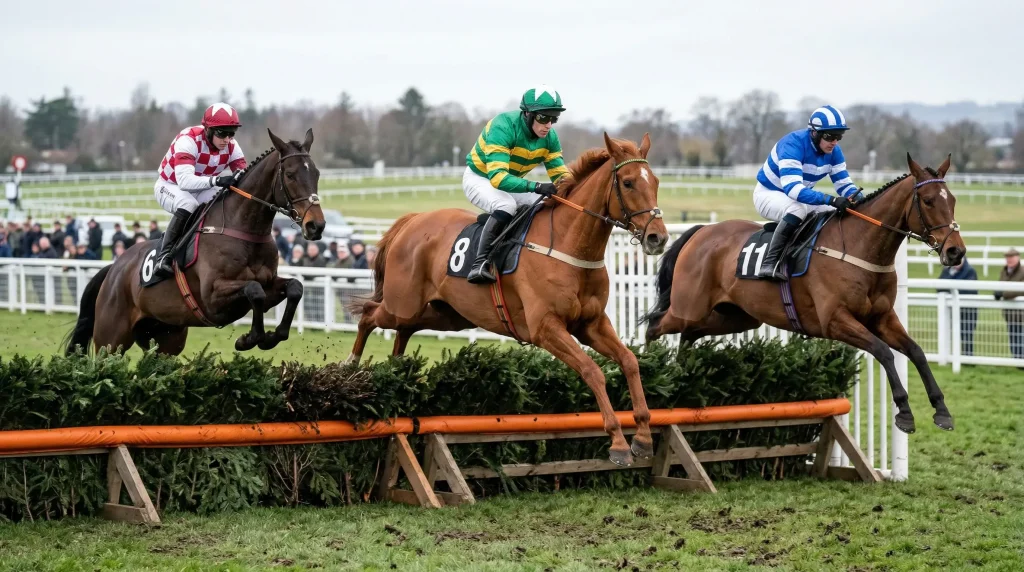
Ayr’s Jump Racing Character
National Hunt racing at Ayr demands appreciation of where jumping ability meets stamina across a course that tests both attributes thoroughly. The track stages approximately 32 racing days annually across Flat and National Hunt programmes, with jump racing dominating from autumn through spring. Understanding the particular challenges Ayr presents helps punters identify horses whose profiles suit the demands.
The jumps course differs significantly from the Flat track that hosts summer sprints and the Gold Cup. Tighter bends, testing fences and undulating terrain create questions that only properly prepared horses can answer. Form from flatter, easier courses does not translate directly, making Ayr-specific analysis essential for serious jump race betting.
This guide examines the National Hunt course layout, identifies seasonal patterns that affect racing quality and conditions, and provides betting angles applicable across Ayr’s jumps programme. Whether targeting the Scottish Grand National or regular winter fixtures, understanding how jump racing works at Scotland’s premier track improves selection accuracy and betting returns.
The biggest jumps day of the year is the Scottish Grand National.
Course Layout: Fences and Hurdles
The chase course at Ayr incorporates plain fences and open ditches that demand precise jumping technique. The fences are fair but testing, punishing horses that jump left or fail to maintain concentration through the turns. The layout rewards accurate jumpers who can navigate obstacles while maintaining rhythm, rather than spectacular leapers who may be inconsistent.
The hurdles course presents different challenges. Flights positioned around the circuit examine horses’ ability to maintain galloping rhythm while clearing obstacles. Quick, economical jumping conserves energy that less fluent jumpers expend unnecessarily. Over staying distances, the cumulative effect of efficient jumping versus wasteful jumping often decides outcomes.
The Scottish Grand National course extends to nearly four miles, incorporating 27 fences that test stamina as severely as jumping technique. Horses tire as the race progresses, and mistakes that fresh horses might recover from become falls or refusals when legs are weary. The course layout punishes horses who lack genuine staying power regardless of their jumping ability.
Undulations around the back straight add complexity. While not as severe as Cheltenham’s famous hills, Ayr’s contours still affect horses differently depending on their action and balance. Runners who handle undulating terrain comfortably hold advantages over those who labour on anything other than flat ground. Form from courses with similar characteristics often translates better than form from flatter alternatives.
The run-in from the final fence measures approximately two furlongs, sufficient distance for staying types to rally but not so long that pure speed decides outcomes. The configuration rewards horses who jump the last well and can sustain effort to the line, rather than those who need to coast home after jumping errors or who lack finishing stamina.
Seasonal Patterns: Autumn to Spring
Autumn brings the start of serious National Hunt action at Ayr. Early-season meetings often feature horses returning from summer breaks, making form assessment challenging as true condition remains uncertain. Ground typically rides softer than summer Flat meetings as rainfall returns, favouring horses with proven soft-ground ability.
Winter racing continues through the coldest months, with Ayr’s excellent drainage ensuring fewer abandonments than at less well-prepared venues. Fields may be smaller during midwinter, but the quality of racing remains competitive. Punters who follow winter cards closely accumulate form knowledge that proves valuable when spring targets approach.
The Scottish Grand National in April represents the climax of the jumps season. Ground conditions vary depending on how wet the preceding months have been, but typically ride in the soft to good-to-soft range as spring advances. The festival atmosphere intensifies betting interest while attracting stronger fields than regular fixtures.
Trainer targeting becomes more predictable as the season progresses. Yards with Scottish Grand National ambitions shape campaigns around the April date, with runs earlier in the season serving as preparation. Identifying which trainers target Ayr specifically, versus those entering horses speculatively, helps distinguish serious contenders from hopeful entries.
The wider context is set out in our Ayr betting guide.
Betting Angles: What to Look For
Completion rates provide essential filtering in National Hunt races at Ayr. The Scottish Grand National’s 2026 renewal saw only 8 of 23 starters complete the course, a finishing rate of approximately 35 percent. Betting on horses likely to fall or tire before finishing wastes stakes regardless of their apparent form quality.
Previous course form deserves heavy weighting. Horses that have won or placed at Ayr bring proven ability to handle the track’s specific demands. First-time visitors must prove their suitability, creating uncertainty that reduces their appeal compared to proven performers. Checking each runner’s Ayr record identifies those with demonstrated course credentials.
Irish form often proves highly relevant. Irish-trained horses, particularly those from yards experienced in sending raiders to British staying chases, bring preparation suited to Ayr’s demands. The testing ground typical at Irish courses mirrors Ayr’s conditions, while Irish National Hunt traditions emphasise stamina that the Scottish Grand National rewards.
Going conditions affect jumping performance significantly. Soft ground slows pace overall but can make fences more demanding as horses struggle to generate lift from heavy surfaces. Quick ground allows faster jumping but punishes tired horses who make late errors. Matching each runner’s demonstrated going preferences to actual conditions improves selection accuracy.
Jockey selection indicates stable confidence. When trainers book their first-choice riders for Ayr runners, particularly for competitive jumps races, conviction about chances tends to be high. Lesser jockeys receiving rides suggest secondary expectations or horses entered to gain experience rather than compete for victory. The quality of booking often reflects private assessments that public form cannot reveal.
Weight allocations matter more over staying distances than shorter trips. Every pound carried requires energy expenditure that compounds across miles of racing. Horses at the top of handicaps face mathematical challenges that favourably weighted rivals exploit, particularly in the final stages when fatigue amplifies weight effects. Favouring lighter-weighted horses with appropriate form improves expected returns.
Equipment changes signal trainer intentions. First-time cheekpieces or blinkers applied for significant Ayr races suggest connections believe something has prevented previous peak performances. Tongue ties address breathing issues that may have compromised previous efforts. Noting equipment changes and tracking their effects across trainers identifies patterns worth following in future selections.
Market timing affects available value. National Hunt markets often feature less liquidity than major Flat races, meaning informed money can move prices significantly. Securing early prices on fancied selections before support arrives locks in value. Conversely, watching for late drifters whose price lengthens without obvious cause may identify horses whose chances have diminished for reasons not yet public.
Jumping Risks Beyond Selection
National Hunt betting involves risks beyond mere selection error. Falls, unseating and other jumping incidents can end races for any horse regardless of ability. Stake appropriately for the uncertainty involved and recognise that even well-analysed selections frequently fail to complete. If gambling creates pressure, support is available through GamCare and the National Gambling Helpline.
