
Ayr Silver Cup and Bronze Cup: Supporting Sprint Races
The Step Below Gold
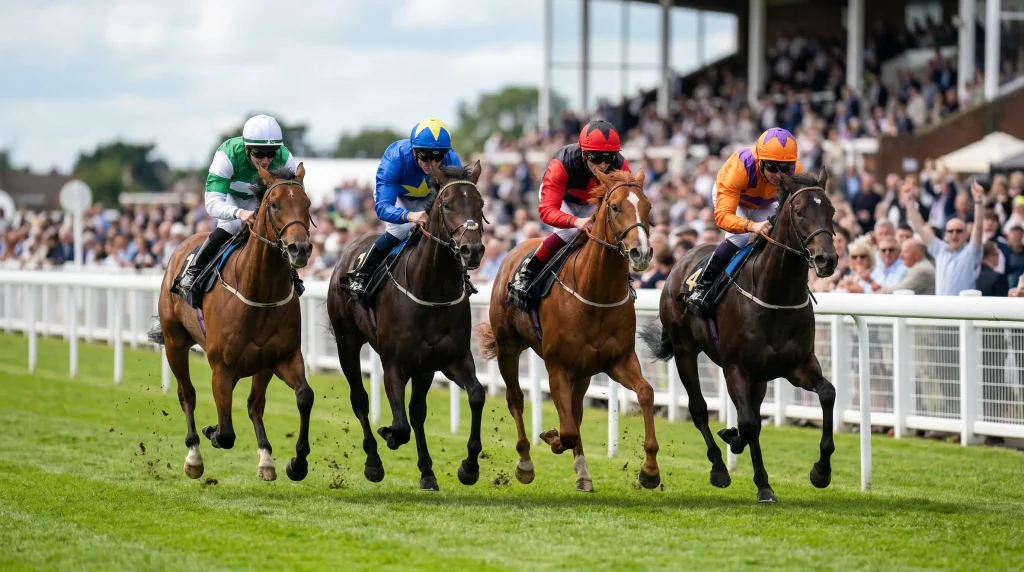
Where Gold Cup also-rans find redemption, the Silver Cup and Bronze Cup provide genuine consolation prizes during the Western Meeting. These six-furlong handicaps exist because the Gold Cup can accommodate only 25 runners from the hundreds that enter, and the overflow includes horses perfectly capable of winning valuable races under the right conditions. For punters, the supporting sprints offer opportunities that the main event’s frenzied attention often obscures.
The hierarchy matters. The Silver Cup attracts horses whose ratings placed them just outside Gold Cup contention or who entered the bigger race and failed to secure a run. The Bronze Cup sits one tier lower, drawing entries from horses with ability but insufficient marks to compete even at Silver level. Both races carry substantial prize money relative to standard handicaps, making them targets for trainers who specialise in placing horses to maximum advantage.
These supporting races share the Gold Cup’s draw biases and going dependencies without sharing its betting volume. The market inefficiencies that compressed odds create in the feature race sometimes appear in reverse during the supporting card, with overlooked runners drifting to prices that misrepresent their chances. Understanding the conditions and historical patterns of the Silver and Bronze Cups provides an edge that applies specifically to these contests and their particular competitive dynamics.
Silver Cup Profile: Conditions and History
The Silver Cup runs over six furlongs on the Friday of Gold Cup weekend, positioned as the festival’s secondary sprint feature. Its rating band sits below the Gold Cup threshold, typically attracting horses rated roughly 0-100 compared to the Gold Cup’s 0-115 upper limit. This difference may seem modest on paper, but it represents a meaningful step down in quality that changes the race’s competitive balance. The sheer demand for Gold Cup places illustrates the overflow: the 2026 edition received 263 entries competing for just 25 starting spots, leaving many capable horses without a run in the main event.
Historically, Silver Cup fields include two distinct types: horses that entered the Gold Cup but failed to make the cut, and horses specifically targeted at the lesser race by trainers who recognised their limitations. The first type often arrives frustrated, their connections having hoped for the main event and forced to settle for the alternative. The second type tends to be better prepared, trained specifically for Friday’s conditions rather than as a backup plan. Distinguishing between these categories helps identify which runners have been positioned to peak and which are making do.
The draw influences Silver Cup outcomes similarly to the Gold Cup. High stalls tend to dominate on good ground, while softer conditions shift the advantage lower. Since Friday’s ground often previews Saturday’s conditions with reasonable accuracy, Silver Cup results provide useful intelligence for Gold Cup betting. A horse that shows strong pace from a high draw on Friday confirms that the track is riding as expected; unexpected results may signal ground variations that Saturday bettors should factor into their analysis.
Prize money for the Silver Cup has grown alongside the Gold Cup’s expansion, though it remains proportionally smaller. The financial reward still justifies travel from distant yards, ensuring competitive fields that test runners seriously. Winners of the Silver Cup sometimes return the following year with improved ratings that qualify them for the Gold Cup itself, completing an upgrade journey that observant punters can track across seasons.
Bronze Cup Profile: Entry and Trends
The Bronze Cup occupies the third tier of the Gold Cup weekend sprint hierarchy, running on Saturday earlier in the card before the main event commands attention. Its rating band sits below even the Silver Cup, drawing horses whose marks exclude them from both higher-class races. This positioning creates a contest that rewards different analytical approaches than its more prestigious siblings.
Fields for the Bronze Cup tend to be large and competitive precisely because so many horses qualify. The width of the rating band means that 25-runner maximum fields are common, with the winner emerging from a pack where few runners lack the basic ability to contest the finish. In such races, factors beyond raw talent often prove decisive: draw position, trainer placement nous, and jockey familiarity with Ayr’s sprint track all carry unusual weight when quality levels are compressed.
The Bronze Cup has produced some notable surprises over the years. Favourites struggle in large-field handicaps at any level, and the Bronze Cup amplifies this tendency through its combination of quantity and quality compression. The pattern mirrors the Gold Cup itself, where only four of the past 24 market leaders converted support into victory. The mathematics point toward identifying overlooked runners whose profiles suit the specific conditions rather than trusting reputation.
Timing matters for Bronze Cup entries. Some horses that contest the Silver Cup on Friday return 24 hours later for another attempt, carrying the advantage of proven course form alongside the disadvantage of a quick turnaround. Others come in fresh, targeting only the Bronze Cup as their festival objective. Assessing which approach suits each runner, and whether the ground and draw conspire to favour fresh or experienced horses, produces the kind of angle that separates thoughtful punters from those who simply back names they recognise.
Betting Angles: Value in Supporting Races
The concentration of public attention on the Gold Cup creates structural advantages for punters willing to engage seriously with its supporting cast. Betting volume on the Silver and Bronze Cups falls well below Gold Cup levels, yet the races themselves are not proportionally easier to assess. This imbalance means that serious analysis produces better relative returns in the supporting races than in the feature event where every angle has been examined by a crowd of competing observers.
Each-way betting works differently in these races. The standard terms, typically one-quarter or one-fifth the odds for places, apply identically to supporting handicaps as to the Gold Cup. However, smaller betting pools can create place-price inefficiencies where certain runners offer better value than the raw odds suggest. Tote pools in particular sometimes diverge from bookmaker prices in ways that reward flexible bettors who check both markets before committing.
Trainer patterns warrant close attention. Certain yards specialise in placing horses to win at festivals, and their runners in supporting races often carry better preparation than the market recognises. A trainer who sends a horse to Ayr specifically for the Silver Cup, rather than as Gold Cup overflow, has made a deliberate placement decision that suggests confidence. Tracking which trainers target which races over multiple seasons reveals tendencies that inform betting approach.
The Gold Cup provides context that applies directly to its supporting races. If the feature event is won by a horse drawn high on good ground, the same draw bias likely operated during the Silver Cup a day earlier and will continue into the Bronze Cup later the same afternoon. Observing the Gold Cup before betting on subsequent Saturday races, time permitting, gives real-time information about conditions that no pre-festival analysis can match. The festival rewards those who treat the entire programme as interconnected rather than approaching each race in isolation.
Staying Grounded Across the Card
Supporting races multiply betting opportunities without multiplying your budget. Maintain the same stake discipline for Silver and Bronze Cup races as you would for the Gold Cup itself, and resist the temptation to treat lower-profile events as opportunities to recover earlier losses. Betting should be entertainment, not pressure; if it feels otherwise, organisations like GamCare offer free and confidential support.