
Best Stall Position at Ayr 5f: Low Draw Advantage Data
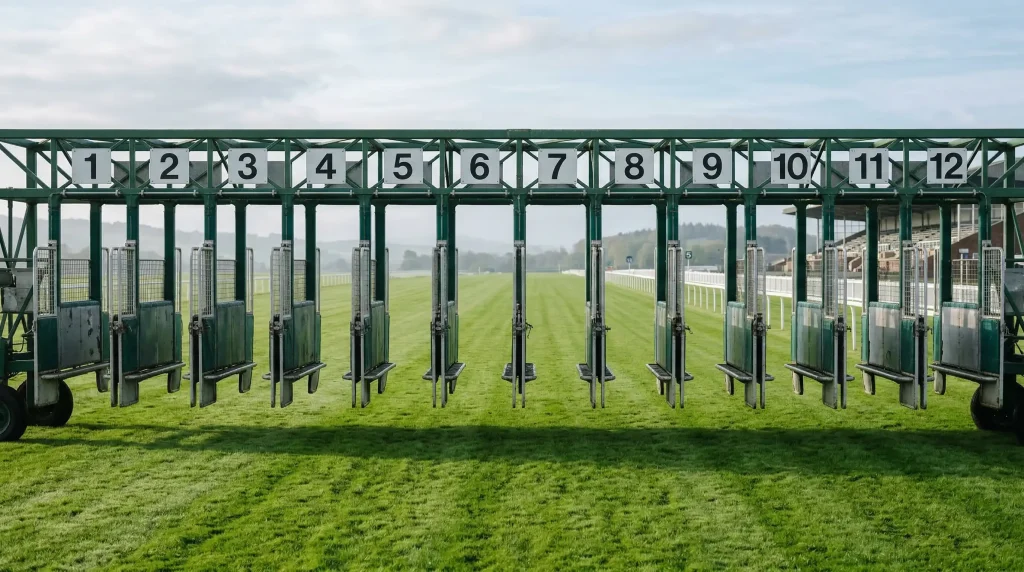
The 5f Draw That Decides Races
At five furlongs, Ayr produces some of the most pronounced draw bias in British racing. Where low numbers mean high chances becomes the operating principle for punters analysing sprint races at this distance, with statistical evidence demonstrating that stall position frequently outweighs form when determining outcomes. The brevity of the trip leaves little time for horses to overcome positional disadvantages, making the draw a primary rather than secondary consideration.
The five-furlong course runs down the straight, hugging the stands rail that provides the fastest ground on most days. Horses drawn low break nearest to that rail and can establish positions along it without expending effort to cross the field. Horses drawn high must either angle toward the rail, losing ground and momentum, or race on the outer where the surface typically rides slower. This geometric reality shapes race dynamics before the gates open.
Understanding the five-furlong draw at Ayr transforms betting approaches for sprint races at the track. As Peter Scudamore observed about Scottish racing, the standard of training is phenomenally high, and trainers who understand draw implications position their horses accordingly. Punters who grasp the same principles can identify value where others see only confusing results influenced by factors they have not recognised.
Stands-Side Advantage: Rail Position Explained
The stands-side rail at Ayr provides advantages that compound across a five-furlong sprint. The strip of ground along this rail receives the most maintenance attention and typically offers the firmest, fastest surface on the track. Horses racing along it can maintain maximum speed with less effort than those forced to gallop through slightly softer ground toward the centre of the course. Over 880 yards, even small differences in surface consistency translate into lengths at the finish.
The camber of the track adds another dimension. Ayr’s straight course tilts slightly toward the stands side, creating a subtle gravitational assistance for horses tracking the rail. This effect is not dramatic enough to be visible to observers, but jockeys report feeling the ground fall away beneath them as they drift wide. Maintaining a rail position requires less steering effort than correcting drift from the centre, allowing riders to focus purely on extracting speed from their mounts.
Early pace establishes rail position in five-furlong sprints. The race is effectively decided in the first two furlongs, when horses from low draws can dash to the rail and secure the premium ground before high-drawn rivals can challenge. Once a horse establishes rail position, it becomes extremely difficult to displace without expending energy that could otherwise fuel the finish. The geometry punishes hesitation at the start.
Wind conditions interact with the stands-side advantage. Prevailing westerly winds at Ayr often create a sheltered corridor along the stands rail, reducing air resistance for horses racing close to it. Meanwhile, horses racing toward the centre of the course face fuller wind exposure that saps finishing speed. Checking wind direction before sprint betting at Ayr provides information that affects the magnitude of the draw advantage without changing its direction.
Statistics Breakdown: Win Rates by Stall
The numbers confirm what geometry suggests. Analysis of five-furlong races at Ayr shows that approximately two-thirds of winners crossed the line toward the stands side, regardless of their starting position. This figure understates the low-draw advantage because it includes horses drawn high who managed to reach the rail, a manoeuvre that costs lengths and succeeds only when significant ability overcomes the positional deficit.
More telling statistics emerge when examining outcomes by stall number. Over a recent five-year period, horses drawn in stall 10 or higher recorded just 2 wins from 77 runners at five furlongs, a win rate of approximately 2.6 percent. Compare this to the overall average win rate of around 8-10 percent per runner in typical fields, and the magnitude of the high-draw disadvantage becomes clear. These horses are not merely less likely to win; they are structurally impaired from competing effectively.
The bias intensifies in larger fields. When 12 or more runners contest a five-furlong sprint, the high-drawn horses face even longer journeys to reach the stands rail, and the crush of traffic makes successful crossing nearly impossible. Larger fields also tend to split into groups, with stands-side and centre-track contingents racing effectively separate races. The stands-side group almost always produces the winner, stranding high-drawn horses in a battle for minor places.
Going conditions modulate but do not eliminate the bias. On genuinely soft ground, the advantage of the stands rail diminishes because the entire surface rides more similarly, reducing the differential between premium and ordinary ground. However, soft ground at five furlongs at Ayr is relatively rare, and even when it occurs, low draws maintain some statistical edge. The default assumption for punters should remain low-draw preference unless clear evidence suggests otherwise.
Betting Adjustments: Using 5f Data
Practical application of five-furlong draw data requires integrating stall position with form analysis rather than replacing one with the other. A well-drawn horse with poor form remains a poor bet; a talented horse with a terrible draw faces structural obstacles that may prove insurmountable. The optimal approach weights both factors, recognising that draw effects can transform marginal form into winning form and can prevent strong form from translating into victory.
Price adjustments should reflect the statistical evidence. A horse drawn in stall 2 with identical form to a horse drawn in stall 12 warrants significantly shorter odds because its placing probability is substantially higher. Markets do not always reflect this reality fully, creating opportunities for punters who understand the mathematics. When a low-drawn horse trades at similar prices to a high-drawn rival, value exists on the low draw regardless of comparative form.
Each-way betting in five-furlong sprints requires draw-adjusted thinking. The place portion of an each-way bet depends on a horse finishing in the first three or four, and high-drawn horses struggle to achieve even these modest positions in large fields. Concentrating each-way stakes on low-drawn runners increases the probability of collecting place returns, compounding the value that draw analysis provides.
Avoiding high draws entirely represents a viable strategy for five-furlong betting at Ayr. Rather than seeking exceptions that might overcome the bias, punters can simply exclude horses drawn 10 or higher from consideration and focus analysis on the remaining runners. This filter reduces field sizes for assessment purposes and eliminates a category of runners whose structural disadvantages make sustained profitability unlikely regardless of other attractive features.
The clerk of the course announces stall positioning before racing, and this information affects how draw numbers translate to actual positions on the track. Ayr uses three different stall configurations, and knowing which configuration applies helps punters assess whether a given draw number positions a horse toward the favourable stands rail or away from it. Following official announcements and understanding their implications adds precision to draw-based selection.
Draw Stats and Betting Reality
Draw analysis improves betting decisions but cannot guarantee profits. Even horses with optimal draws lose regularly, and statistical edges require many bets to materialise. Set firm limits before engaging with sprint betting and treat stakes as entertainment expenditure. If gambling creates stress rather than enjoyment, support is available through GamCare and the National Gambling Helpline.