
Scottish Grand National Trends: Stamina and Irish Form Patterns
Patterns in Scotland’s Marathon
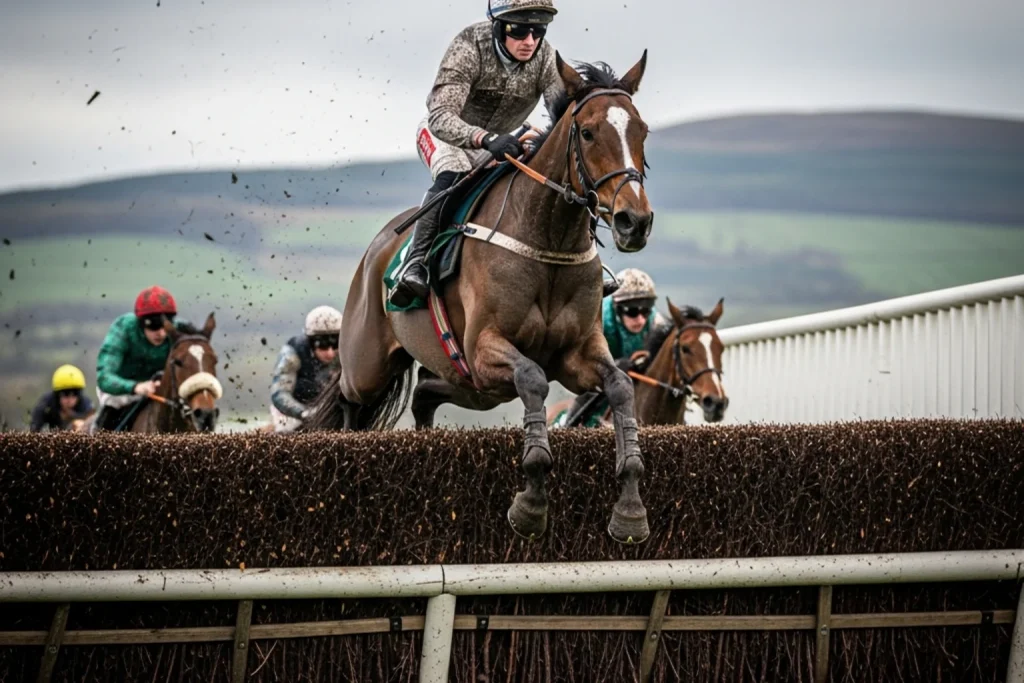
The Scottish Grand National produces trends that reveal true stayers capable of completing nearly four miles over 27 fences. Unlike shorter races where speed alone can triumph, this marathon steeplechase demands stamina, jumping accuracy and the mental fortitude to sustain effort long after others have emptied. Identifying the patterns that predict success transforms a challenging betting puzzle into a more manageable analytical exercise.
Scotland’s ultimate staying chase rewards specific characteristics that form analysis can identify. Previous winners share common threads in their racing histories, their training backgrounds and their physical profiles. Understanding these threads helps punters separate genuine contenders from hopeful entries whose connections target the race more in hope than expectation.
This guide examines the stamina indicators that matter, explains the Irish dominance that has reshaped the race’s competitive landscape, and analyses completion rates that filter fields to horses capable of reaching the finish. The Scottish Grand National’s length and difficulty make it uniquely demanding, and the trends that emerge reflect those unique demands.
Stamina Indicators: Form Lines That Matter
The Scottish Grand National’s four-mile trip demands stamina credentials that shorter races cannot test. Horses without proven ability to stay extreme distances face barriers that tactical skill cannot overcome. Identifying reliable stamina indicators separates horses with genuine marathon ability from those whose connections are testing their limits.
Previous form over three miles or further provides the clearest evidence of staying power. Horses that have won or placed in races at three miles and upward demonstrate the endurance that the Scottish Grand National demands. Form at shorter distances may indicate quality but cannot confirm stamina, leaving uncertainty that punters should price accordingly.
The Aintree Grand National and its trials provide relevant form lines. Horses that have completed the Aintree course, with its similar distance and testing demands, arrive at Ayr with proven marathon credentials. The two-week gap between Aintree and the Scottish Grand National creates interesting scenarios: some horses attempt the double fresh, while others arrive carrying residual fatigue from the Liverpool marathon. As Lucinda Russell has noted about northern trainers, they produce horses capable of competing at any level, and staying types from Scottish yards often possess the toughness that marathon chases demand.
Irish National form correlates strongly with Scottish Grand National success. The Irish equivalent runs over similar distances on typically testing ground, and horses that perform well there bring directly relevant experience to Ayr. Irish trainers routinely cross for the Scottish version, applying preparation methods refined through decades of marathon race targeting.
Irish Connection: Why Mullins and Co. Dominate
Irish-trained horses broke a 155-year drought when Willie Mullins’ Macdermott won the 2026 Scottish Grand National — the first Irish success since Doorknocker in 1869. Mullins then repeated with Captain Cody in 2026, suggesting a potential shift in the race’s competitive landscape. Understanding why Irish raiders have suddenly found success helps punters identify which entries from across the sea warrant support.
Irish training methods emphasise stamina development. The Closutton operation and other leading Irish yards prepare horses through programmes designed to build endurance, using gallops over varied terrain that mirror the demands of marathon chases. British training, influenced by flatter racecourses and different traditions, may not develop stamina reserves to the same degree.
Ground conditions favour Irish horses. The soft going typical at Ayr in April mirrors conditions that Irish horses encounter throughout their domestic seasons. While British-trained horses may experience soft ground occasionally, Irish horses race and train on testing surfaces routinely, developing the strength and technique needed to handle such conditions without losing efficiency.
Willie Mullins’ back-to-back victories in 2026 and 2026 exemplify the Irish advantage. His Closutton powerhouse applies unmatched resources to identify horses suited to staying chases, preparing them through campaigns that build toward spring targets. The consistency of Mullins’ success suggests that his methods produce repeatable advantages rather than fortunate timing.
Other Irish trainers contribute to the pattern. Gordon Elliott, Henry de Bromhead and smaller Irish operations all send runners with profiles matching Scottish Grand National requirements. The collective Irish success indicates cultural and methodological advantages that extend beyond any single yard, creating a national edge in marathon chase racing.
Completion Rate Impact: Survival of the Fittest
The Scottish Grand National tests completion rates severely. The 2026 renewal saw only 8 of 23 starters complete the course, a finishing rate of approximately 35 percent. This attrition creates a race within a race: first, horses must survive to the finish, then they must place well among survivors. Betting analysis must account for both challenges.
Horses that have completed long-distance chases previously demonstrate the combination of stamina, jumping accuracy and luck that finishing requires. Previous Scottish Grand National completers hold obvious advantages, their experience of the specific course and conditions reducing uncertainty. Checking each runner’s completion record over similar distances identifies those with proven ability to reach the finish.
Jumping errors account for many non-completions. The 27 fences catch tired horses who lose concentration or technique as the race progresses. Horses with clean jumping records over staying distances, few falls or unseats in their form, suggest reliability that erratic jumpers cannot match. While any horse can make mistakes, those with histories of accuracy warrant more confidence than serial blunderers.
Pace and positioning affect completion probability. Horses that race prominently expend energy early, potentially emptying before the finish; those held up may lack the acceleration needed to finish strongly even if they complete. Finding runners whose running styles suit the Scottish Grand National’s demands, typically those who travel economically before staying on strongly, identifies horses whose tactical profiles enhance their completion and placing chances.
Weight also influences completion rates over marathon distances. Horses at the top of the weights carry burdens that compound across nearly four miles, increasing the energy expenditure that leads to late-race fatigue. Lighter-weighted horses preserve more reserves for the final fences, where tired rivals make the mistakes that end their races. Favouring horses in the lower half of the weights improves the probability of backing completers.
Ground conditions affect completion patterns differently than shorter races. Soft ground slows the overall pace, allowing horses to travel more economically in the early stages, but it also demands more energy per stride throughout. Genuine heavy ground produces lower completion rates as horses struggle to maintain momentum through testing conditions. Checking the going forecast and assessing each runner’s record on similar surfaces helps identify those likely to handle prevailing conditions without exhausting themselves before the finish.
The Cheltenham Festival, held two weeks before the Scottish Grand National, affects horses’ prospects. Runners that contested demanding races at Cheltenham may carry fatigue that compromises their Ayr performance, while fresh horses gain relative advantages. Checking which Scottish Grand National entries ran at Cheltenham, how demanding their races were, and how they recovered provides insight into likely freshness levels.
Staying Chase Uncertainties
Marathon chase betting carries inherent uncertainty that trends cannot eliminate. Even horses matching every positive indicator lose regularly in races where completion itself is not guaranteed. Stake within your limits and treat betting on staying chases as entertainment. If gambling creates pressure, support is available through GamCare and the National Gambling Helpline.