
Ayr Trainers and Jockeys: Course Specialists Who Consistently Deliver
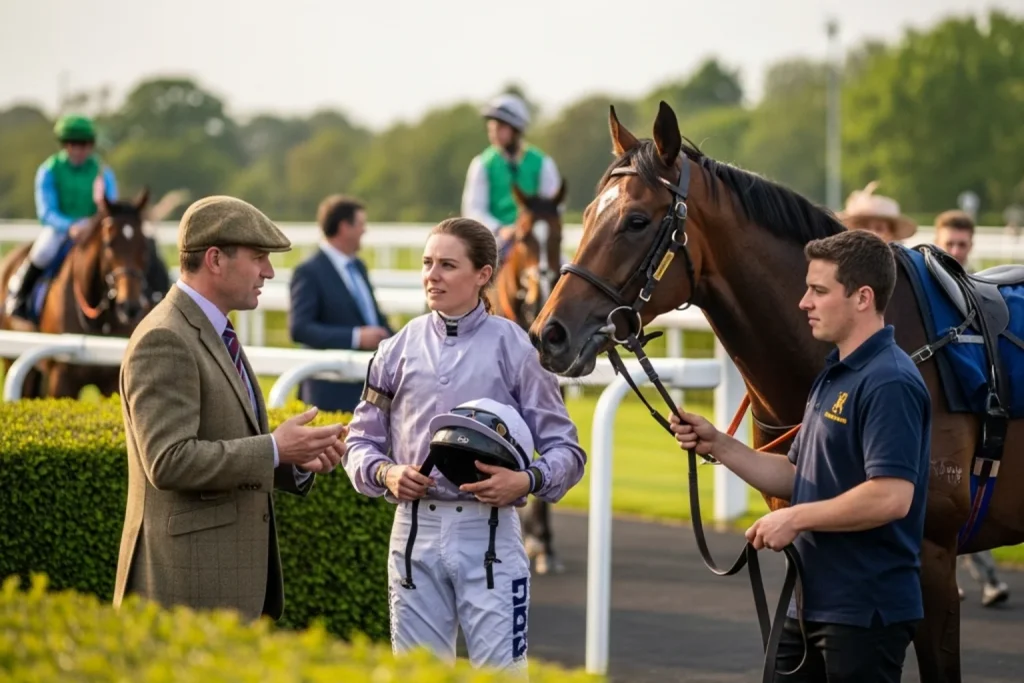
Following the Money to Course Specialists
Every racecourse develops its own ecosystem of trainers and jockeys who understand its peculiarities better than occasional visitors. At Ayr, this ecosystem is particularly pronounced because the track’s unique characteristics—the three-stall system, the left-handed configuration, the west coast conditions—reward specific kinds of expertise. Identifying course specialists who consistently deliver represents one of the most reliable edges available to Ayr bettors.
The professionals who dominate Ayr racing share common traits: they send runners to the track frequently enough to build genuine familiarity, they understand how different conditions affect results, and they target the big races with horses prepared specifically for Ayr’s demands. Following these trainers does not guarantee profits, but it focuses attention on runners whose connections have demonstrated they understand what wins at this venue.
Flat racing at Ayr is dominated by northern powerhouse yards, particularly Karl Burke and Kevin Ryan, whose sprint handicap expertise translates into remarkable Ayr Gold Cup records. National Hunt racing shows a different pattern, with Irish trainers—Willie Mullins foremost among them—exploiting the Scottish Grand National while British jumps specialists work to close the gap. Scottish-based trainers occupy a middle ground, possessing local knowledge but often lacking the resources to compete with larger operations.
This guide profiles the trainers and jockeys whose Ayr records demand attention from serious bettors. Beyond raw statistics, it examines the patterns that characterise success at the track: which types of horses these specialists run here, how they prepare runners for Ayr’s specific challenges, and what their presence in a race should signal to those analysing the betting market. Course specialists represent knowable advantages in a sport often dominated by uncertainty.
The value of tracking course specialists extends beyond individual race selection. Over time, understanding which trainers excel at Ayr shapes broader market awareness, helping you identify situations where the betting public has mispriced a runner’s chances because they have not accounted for trainer track record. These systematic edges compound across seasons, making trainer analysis a cornerstone of profitable Ayr betting.
Building your own database of Ayr specialist performance creates lasting analytical advantages. Recording which trainers perform well at specific meetings, distances, and conditions produces insights that generic statistics miss. This personalised knowledge base becomes more valuable as you accumulate observations, eventually allowing you to spot opportunities faster than bettors who rely on published data alone.
Flat Specialists: Burke and Ryan Domination
The flat racing programme at Ayr has become something approaching a private competition between two northern training operations. Karl Burke and Kevin Ryan have accumulated Ayr Gold Cup records that transform how bettors should assess their runners at the track, not just in the feature race but throughout the season when their horses appear on the Ayr card.
Karl Burke’s 2026 achievement stands alone in the 220-year history of the Ayr Gold Cup. He saddled the first three finishers—Lethal Levi, Silky Wilkie, and Korker—a clean sweep unprecedented in the race’s history. Lethal Levi’s winning time of 1:07.75 was the fastest in two decades, demonstrating that Burke’s horses arrived at Ayr in peak condition for the specific demands of the six-furlong sprint. When a trainer dominates so completely, dismissing it as coincidence requires ignoring evidence that screams systematic advantage.
Burke’s operation specialises in the kind of sprinters who thrive in competitive handicaps: tough, consistent horses who handle traffic and respond to pressure. His Spigot Lodge yard in North Yorkshire provides proximity to Ayr that allows frequent raiding, building the course knowledge that occasional visitors lack. Burke’s horses at Ayr warrant automatic respect, particularly in sprint handicaps where his preparation methods translate directly into results.
Kevin Ryan’s record stretches across a longer period and confirms similar patterns. Five Ayr Gold Cup victories since 2007 make him the defining trainer of the race across the modern era. Ryan’s Hambleton Lodge operation sits close to Burke’s in Yorkshire, and the rivalry between these yards has shaped how sprint handicapping works across northern racing. When Ryan sends a runner to Ayr, particularly to a sprint handicap, it reflects deliberate targeting rather than casual entry.
“The standard of training is phenomenally high,” observed Peter Scudamore, the eight-time champion jockey turned racing pundit, when discussing northern training centres. That assessment captures what Burke and Ryan represent: world-class preparation applied to horses suited for specific competitive challenges. Both trainers understand draw bias, going interactions, and pace dynamics at Ayr in ways that generate edges over less familiar opponents.
Beyond these headline names, the broader northern contingent merits attention. Tim Easterby, David O’Meara, Richard Fahey, and Keith Dalgleish all send regular runners to Ayr with records that exceed random chance. Yorkshire-based yards treat Ayr as accessible territory, making the trip north frequently enough to develop institutional knowledge. Southern-trained horses raiding Ayr face competitors whose trainers genuinely understand the track—a disadvantage that form analysis alone does not capture.
For bettors, the practical implication is straightforward: runners from these established Ayr specialists deserve closer examination than their odds might suggest, particularly in handicaps where course knowledge compounds basic ability advantages. When Burke or Ryan targets a specific race with a well-drawn, appropriately weighted runner, that combination of factors creates the kind of value that systematic bettors seek.
The rivalry between Burke and Ryan has shaped Ayr’s sprint handicap landscape in ways that benefit observant punters. Both trainers arrive at Ayr with horses prepared to win, not merely to compete. Identifying which of their entries represents the primary target versus a secondary opportunity—often visible through jockey bookings, market movements, and interview comments—can distinguish their genuine fancies from supporting cast members.
Jumps Specialists: Mullins, Russell and the Irish Factor
National Hunt racing at Ayr operates in a different competitive landscape than the flat programme. Irish trainers have established dominance that British yards struggle to match, with Willie Mullins in particular treating the Scottish Grand National as a race he expects to win. Understanding this Irish factor—and identifying which British trainers can occasionally upset it—shapes intelligent betting on Ayr’s jumps fixtures.
Willie Mullins won back-to-back Scottish Grand Nationals with Macdermott in 2026 and Captain Cody in 2026, becoming the first trainer to achieve consecutive victories since the 1980s. These wins were not flukes; they reflected systematic targeting of a race that suits his staying chasers. Mullins’ operation produces horses with the stamina reserves and jumping soundness that four-mile handicap chases demand. When he enters a runner in the Scottish Grand National, the market pays attention—and it should.
The broader Irish pattern confirms Mullins is not an outlier. Irish-trained horses won eight of the fifteen Scottish Grand Nationals between 2011 and 2026, a majority that reflects structural advantages in how Irish yards develop staying chasers. The Irish National Hunt calendar features more races over extreme distances, exposing horses to marathon demands more frequently. This regular testing builds both physical resilience and psychological confidence that transfers to Ayr’s demanding course.
Gordon Elliott, Henry de Bromhead, and other Cheltenham regulars view the Scottish Grand National as a logical target when their staying chasers miss Aintree or need an alternative to the Irish National. Cross-channel raiders arrive at Ayr with preparation geared specifically for this type of race, an advantage over British horses who may be entering unfamiliar competitive territory.
Among British trainers, Lucinda Russell represents the standard-bearer for Scottish National Hunt racing. Her 2017 Aintree Grand National victory with One For Arthur demonstrated that Scottish-based yards can compete at the highest level, though she has spoken candidly about the challenges. “We have great trainers up in the north, just as good as the ones in the south. But we need big winners to attract the owners because that’s what it comes down to at the end of the day,” Russell observed, highlighting how resource constraints limit Scottish ambitions.
Nicky Henderson, Paul Nicholls, and other leading British jumps trainers occasionally raid Ayr, but their Scottish Grand National records do not match their Cheltenham results. The journey north, the unfamiliar track, and the competition from Irish specialists who prioritise this race create headwinds that even leading yards struggle to overcome. Bettors should not assume that a powerful stable name translates automatically to Ayr success in the jumps sphere.
For betting purposes, the Irish factor demands respect without requiring blind acceptance. Mullins entries in the Scottish Grand National warrant serious consideration at almost any price, but the seven British winners in fifteen years show the dominance is not absolute. Identifying which British horses possess genuine stamina credentials—proven over extreme distances, with clean jumping records under fatigue—offers routes to value when the market overprices Irish raiders.
The timing of Mullins’ Scottish Grand National targeting also matters. He typically sends horses who have either missed Cheltenham or used it as preparation rather than a peak effort. These horses arrive at Ayr fresh enough to handle four demanding miles, while some rivals may be feeling the effects of harder Festival campaigns. Understanding where the Scottish Grand National fits in Mullins’ planning hierarchy helps assess how seriously he is targeting the race with each entry.
Scottish Contingent: Home-Team Advantage
Scottish-based trainers occupy a distinctive position in Ayr racing. They possess genuine home-team advantages—local knowledge, reduced travel stress for horses, familiarity with conditions—yet often lack the resources to compete with larger English and Irish operations. Understanding where Scottish trainers excel, and where their limitations show, helps bettors identify specific opportunities without overestimating the home contingent.
The economic context matters. Scottish Racing’s projections suggest the industry could contribute £513.6 million to the Scottish economy and sustain nearly 3,720 jobs by 2026, but this growth depends on improving competitiveness at the highest levels. Currently, Scottish trainers dominate lower-grade racing at Ayr while struggling to win the feature events that attract most betting interest. The Ayr Gold Cup has not been won by a Scottish trainer since Nigel Angus and Roman Warrior in 1975—a fifty-year drought that speaks to structural disadvantages.
Jim Goldie represents one of Scotland’s leading flat trainers, with a yard near Dumfries that provides proximity to Ayr. Goldie’s runners typically compete in handicaps rather than pattern races, targeting realistic opportunities where his horses can be competitive. His Ayr record shows solid performance in these contests, though the feature races remain beyond reach. Backing Goldie runners in appropriate races—particularly handicaps at sprint distances—offers value because the market sometimes overlooks Scottish-trained horses.
Keith Dalgleish, Iain Jardine, and Ewan Whillans maintain smaller Scottish operations that contribute runners to Ayr programmes throughout the season. These trainers know the track intimately, understand its idiosyncrasies, and prepare horses specifically for Scottish conditions. In small-field races or modest handicaps, their local expertise can translate into edges over English raiders who view Ayr as an occasional target rather than a home venue.
For National Hunt racing, Lucinda Russell leads the Scottish contingent despite competing against better-resourced Irish and English yards. Her Kinross-based operation produces horses capable of winning at festival level—the Aintree Grand National victory proved that conclusively—but cannot match the volume of talent that Mullins or Elliott deploy. When Russell targets Ayr specifically with a well-prepared runner, that focus deserves recognition.
The betting angle for Scottish trainers involves identifying where their expertise matches the competitive landscape. In Class 5 and Class 6 handicaps at Ayr, Scottish-trained horses often outperform their odds because the market undervalues local knowledge in races that attract little professional attention. In the Ayr Gold Cup or Scottish Grand National, the same trainers face competition that exposes their resource limitations. Matching trainer capabilities to race type produces better selections than applying uniform expectations across all contests.
The aspirations of Scottish racing extend beyond individual race results. Industry projections aim to grow the sport’s economic impact while improving competitiveness at the highest levels. For bettors, this means monitoring whether Scottish trainers develop the resources and methods to challenge for major prizes more consistently—a gradual shift that could create opportunities before the market fully adjusts to improved Scottish form.
Jockey Course Records: Strike Rates and Patterns
Jockey selection at Ayr follows patterns that reward attention. Certain riders develop Ayr specialisms that persist across seasons, while others visit occasionally without building the course familiarity that translates into results. Tracking which jockeys thrive at this specific track adds a layer of analysis beyond trainer records alone.
The leading flat jockeys in Britain—Oisin Murphy, William Buick, Tom Marquand—occasionally ride at Ayr for major meetings but lack the frequency of visits that builds deep course knowledge. Northern-based jockeys such as Jason Hart, Connor Beasley, and David Allan ride at Ayr regularly enough to understand its nuances: where the fastest ground lies, how different stall positions affect pace dynamics, and which tactical approaches work at various distances.
Strike rate analysis by jockey can identify specialists whose Ayr record outperforms their overall statistics. A jockey with a 15% general strike rate who manages 22% at Ayr is demonstrating something—either superior course knowledge, better mounts at this particular track, or some combination of both. Either explanation suggests their Ayr rides deserve closer attention than their national statistics would warrant.
Booking patterns offer additional signals. When a leading trainer books a different jockey specifically for Ayr, it may reflect desire for course experience that their usual rider lacks. Conversely, when an Ayr specialist picks up a spare ride on a well-fancied horse, the combination of course knowledge and quality mount creates interesting propositions. Watching who rides what at Ayr meetings can reveal information the market has not yet processed.
National Hunt jockeys show different patterns. The Irish riders who partner Mullins and Elliott horses at Ayr—Brian Hughes, Danny Mullins, Jack Kennedy—bring quality but not necessarily course familiarity. British-based jump jockeys who ride regularly in Scotland, such as Sean Quinlan or Craig Nichol, offer local expertise that can matter in competitive handicaps where small advantages accumulate.
The apprentice and conditional jockey allowances also merit consideration at Ayr. A talented young rider with regular Ayr experience, claiming five or seven pounds, can represent excellent value on appropriately weighted horses. These claims compress the weight differences in handicaps, potentially giving well-ridden horses advantages that justify prices longer than pure ability would suggest.
Jockey fitness and confidence levels throughout a meeting can affect performance. Riders who have already won earlier on the card often show increased confidence in later races, while those who have suffered falls or tough beats may ride more conservatively. Observing jockey body language and performance patterns during an Ayr meeting provides real-time information that race replays and statistics cannot capture.
Trainer-Jockey Combinations: Partnerships to Watch
Certain trainer-jockey combinations produce results at Ayr that exceed what either would achieve separately. These partnerships reflect working relationships where rider understanding of trainer methods, horse preparation patterns, and tactical preferences creates synergies that translate into winning percentages.
Karl Burke’s association with Clifford Lee in the 2026 Ayr Gold Cup demonstrated what these combinations can achieve at the highest level. Lee delivered Lethal Levi to a course record time because he understood exactly how Burke had prepared the horse and what tactics would maximise the partnership’s chances. This was not simply a good jockey on a good horse—it was a combination where each element reinforced the other.
Kevin Ryan has developed similar partnerships with jockeys who understand his operation. Tom Eaves rode multiple Ayr Gold Cup winners for Ryan before retiring, establishing a template that subsequent retained riders have followed. When Ryan runs a horse at Ayr with his stable jockey aboard, the combination benefits from accumulated institutional knowledge that occasional partnerships cannot replicate.
For smaller yards, trainer-jockey combinations matter even more because the margin for error is narrower. A Scottish trainer who regularly uses a specific jockey develops understanding that compensates partially for resource disadvantages compared to larger operations. These established partnerships often outperform at Ayr because both parties know exactly what to expect from each other.
Tracking combination statistics requires more effort than simple trainer or jockey analysis, but the payoff can justify the work. When a proven Ayr combination enters a competitive handicap, the partnership’s historical success rate should inform how bettors assess chances. This is particularly true when the combination has targeted a specific race type repeatedly, building expertise that general statistics do not capture.
New combinations warrant caution regardless of individual track records. A talented jockey’s first ride for a trainer at Ayr lacks the established understanding that regular partnerships possess. Similarly, a trainer using an unfamiliar rider for a significant Ayr race may be missing the nuances that their usual jockey would bring. These factors do not disqualify such combinations, but they suggest adjusting expectations downward from what individual records might predict.
The most valuable combination insights come from identifying patterns that the broader market overlooks. When a lesser-known trainer consistently performs well at Ayr with a specific jockey, that partnership may offer value because punters focus on headline names rather than systematic analysis. Discovering these under-the-radar combinations before they become widely recognised represents one of the more sustainable edges in Ayr betting.
Beyond the Statistics
Following trainers and jockeys provides useful information for race analysis but does not create certainty. Horse racing outcomes depend on factors beyond human control—injuries, ground conditions, traffic in running, the countless variables that make any race unpredictable. Even the most successful trainer-jockey combinations lose more races than they win.
Set clear limits on betting activity before studying any race meeting. Never stake more than you can afford to lose entirely, and never increase bets to recover previous losses. If betting on racing ceases to be enjoyable or creates financial or emotional stress, seek support from organisations including GamCare, BeGambleAware, and the National Gambling Helpline.
All UK-licensed bookmakers offer responsible gambling tools: deposit limits, loss limits, session time reminders, and self-exclusion through GAMSTOP. These tools exist to help maintain control over gambling activity. Using them demonstrates sensible precaution rather than any kind of weakness. The information in this guide should enhance racing enjoyment, not fuel problematic gambling behaviour.
Remember that even the most successful Ayr specialists endure losing runs. Karl Burke, Kevin Ryan, and Willie Mullins all experience periods when their Ayr runners underperform expectations. This is normal variance in a sport where favourite horses lose more often than they win. Maintaining perspective on the limitations of trainer and jockey analysis helps sustain a healthy relationship with betting.